Search This Blog

Monday, February 15, 2021

U.S. Home Prices Pass 2005's Peak Level

 "Where's the inflation?" Central Bankers will undoubtedly and rhetorically ask critics and skeptics at a variety of upcoming speeches. 

Meanwhile, U.S. housing prices have finally eclipsed their peak from 2005 in the years leading up to the Great Recession. Note that at the beginning of 2021, we said real estate was entering the year in a "massive bubble". 

A combination of low interest rates and trillions in freshly printed dollars has led to the the median price of a single family home rising 14.9% to $315,000 in Q4. It was "the biggest surge in data going back to 1990, according to the National Association of Realtors," according to Bloomberg.

"Prices rose in all 183 metros measured by the group and 161 had double-digit growth compared with just 115 of them in the third quarter," the report notes.
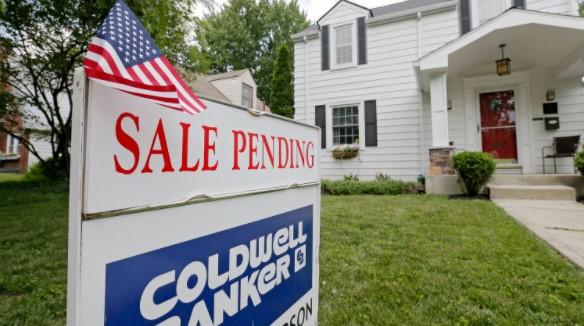
The move was most pronounced in the Northeast, which saw a 21% gain as a result of buyers leaving cities and flocking to the suburbs. Fairfield County, Connecticut led the way, rising 39%. We have written extensively, not just about families moving to the suburbs, but also corporations. Over the past year, we've presented a ton of evidence (see: here & here & here) of city dwellers fleeing for the exits, some of which was due to the virus pandemic unleashing a technological wave of remote working, allowing these folks to work anywhere with an internet connection. 

In addition to new work-from-home rules, low borrowing costs have also helped people along in their decision to relocate. The rise in prices can be a bad omen for those looking to buy. The obvious decision is for people to leave expensive areas like New York and San Francisco in favor of more affordable areas. Surging home prices, as we pointed out in January, mean that young Americans can't afford to buy, and a record 34% of them now live with their parents...

Lawrence Yun, chief economist at NAR, concluded: “The average working family is struggling to contend with home prices that are rising faster than income. This sidelines a consumer from becoming an actual buyer, causing them to miss out on accumulating wealth from homeownership.”

And even in the city, real estate is once again picking up. Recall, we noted this week that Manhattan luxury real estate just had its best week since 2019. The latest market report from Olshan Realty shows 30 luxury home contracts were signed last week. Twenty-one of those were condo units, four were co-ops, and five were townhomes.

A surge in buying interest comes as developers and sellers have slashed luxury property prices following the virus pandemic. Even before the pandemic, around half of all new condo units built after 2015 were unsold. A lot of inventory still sits on the sidelines. 

However, Donna Olshan, who tracks luxury sales, said last week's report is "very optimistic because really what it's showing is the consumer is out there and aggressively looking at New York as a place to buy and live." 

In the last two weeks, 57 contracts were signed, 48 of which were apartments. Of those, half were sold by developers. The totals in the previous two weeks "continued a trend that started after the November election—a cocktail stirred with ingredients ranging from the Covid-19 vaccine to low interest rates, a robust stock market and meaningful discounts," Olshan continued. 

https://www.zerohedge.com/markets/us-home-prices-pass-2005s-peak-level

Sunday, February 14, 2021

How will renting in NYC change if mom-and-pop landlords cash out?

 Faced with tenants who can't pay the rent and with no reprieve on their taxes or mortgages, mom-and-pop landlords say they're being chased out of New York City—and it's low-income tenants that will suffer. 

Measures enacted to protect tenants suffering financial hardship during the pandemic, like eviction moratoriums, are hurting landlords because they don't help with the loss of income. For some of the city's small landlords, the pandemic has them questioning whether they can continue to operate or will have to sell to larger rental companies.

If many of them do so, the fear is NYC could lose more affordable housing and see more transient neighborhoods. At the very least, more tenants will miss out on the quintessential NYC experience of renting from an individual landlord who has deep roots in a neighborhood and takes care of his or her own (quirky) building themselves.

Matt Murphy, executive director of the NYU Furman Center, a real estate research institute, says the strain on smaller landlords is obvious. Larger institutional building owners with diverse portfolios are likely better positioned to handle the types of losses the pandemic has brought about than many of the smaller landlords who say they are struggling to meet their obligations. 

From a policy perspective, Murphy points out city data on small building ownership is difficult to categorize. But enough is known about the national picture—small landlords own 77 percent of small buildings, where the average rent is lower ​​​than that in median or large apartment buildings—to conclude that in New York, rentals in small buildings are "an unheralded supply of affordable housing."

Here's what could happen if small landlords can't hang on in NYC and how it renters will be impacted.

Loss of affordable housing

Small property owners are more likely than institutional landlords to own smaller, more affordable buildings, Murphy says. Mom-and-pop landlords also tend to rely less on rigid tenant screening tools and as a result provide housing for undocumented New Yorkers, people with poor credit history, or tenants who can't qualify through a more standardized process, he says. 

Labor market data compiled early in the pandemic suggests people who work in the service economy are more likely to be living in these types of buildings. According to analysis by Noah Kazis, a legal fellow at the NYU Furman Center, renters in more vulnerable occupations are more likely to live in the city's small buildings, particularly those with two to four units.

Murphy says there are big questions about the opportunities for these workers if they find themselves unable to live in this type of housing. If these buildings adopt stricter vetting protocols for renters, it will become more difficult for lower income workers to qualify for apartments.

The loss of rentals in small buildings run by mom-and-pop landlords would make it very difficult for some service workers to stay in the city, Murphy says.

More transient neighborhoods

Robert Lee, a small landlord in Brooklyn, who operates 19 apartments in five buildings, says he's watched the families in his three-unit building in Bushwick raise their kids from diapers to college. He argues small landlords create stability in city communities that would disappear if they sell to developers. "I’m not here to flip apartments or build luxury apartments but I can’t do this," he says. 

In his view, the current eviction moratorium as well as the increased tenant protections passed in 2019 make it increasingly hard to keep going.

"These are laws to put us out of business," he says. Lee recently sold a three-unit building to developers because he was concerned about the future. Now he says those tenants are going "through hell," as the new owner tries to move them out. The Housing Stability and Tenant Protection Act was meant to disincentivize harassment from landlords because rent-stabilized apartments could no longer be easily cycled out of the affordable housing program. In spite of this and additional tenant harassment laws, the practice of trying to remove unwanted tenants is yet to be eliminated. 

Building conditions will suffer

If you are renting from a small landlord who is struggling—they won't be able to make critical upgrades, and so the most likely outcome for tenants is that these buildings will go through a period of disrepair. These are "genuine concerns," Murphy says

Small property owners are much less likely to have reserves and lines of credits compared to large investors. The pandemic has been an accelerator for long-term trends and if there is a tipping point for defaults and foreclosures in the coming decade, Murphy suggests we'd see it in the city's small building stock first. 

https://www.brickunderground.com/rent/nyc-mom-pop-landlords-cash-out-what-happens-affordable-apartments

Saturday, February 13, 2021

Fed eyes trouble in commercial real estate, corporate debt in 2021 stress tests

 The U.S. Federal Reserve on Friday unveiled the hypothetical recession it plans to test large banks against in its 2021 stress tests, which includes "substantial stress" in the commercial real estate and corporate debt markets.

The scenarios also envision a global recession where U.S. unemployment jumps to 10.75%, economic growth falls by 4%, and the stock market sheds 55% of its value. Nineteen of the nation's largest banks will be subject to this year's test, with results published sometime in the summer.

“The banking sector has provided critical support to the economic recovery over the past year. Although uncertainty remains, this stress test will give the public additional information on its resilience,” Vice Chair for Supervision Randal K. Quarles said in a statement.

The 2021 test will mark a return to normalcy for the Fed, which resorted to testing banks twice last year after it became clear the economic impact from the coronavirus pandemic had actually exceeded the severe downturn envisioned by the Fed's original test.

But after both tests, the Fed said that it found the largest banks remained well-capitalized despite severe downturns, and in December it relaxed restrictions on capital payouts like stock buybacks.

The upcoming test will apply to 19 of the nation's largest banks, although smaller firms that are now tested on a two-year cycle could opt into this year's test if they so choose. Ten of the banks with the largest trading operations will also be tested against a hypothetical global market shock, while 12 of the firms with significant trading or processing operations will also be tested against the failure of their largest counterparty to test their resilience.

https://www.streetinsider.com/Fed/Fed+eyes+trouble+in+commercial+real+estate%2C+corporate+debt+in+2021+stress+tests/17962888.html

Thursday, February 11, 2021

Brandywine To Break New Ground At Schuylkill Yards, Nears 1M SF In Life Sciences Pipe

 Nearly five years after first announcing Schuylkill Yards, Brandywine Realty Trust is almost ready to go vertical at its megaproject.

Placeholder
The West Tower at Schuylkill Yards (left)

Brandywine Realty Trust will break ground in March on a 570K SF, $287M mixed-use tower at 3025 JFK Blvd., part of the 14-acre, $3.5B innovation neighborhood the REIT is developing in partnership with landowner Drexel University, Brandywine announced on Wednesday. Dubbed the West Tower at Schuylkill Yards, the project will include 326 rental residences, 200K SF of life sciences and office space, 29K SF of indoor/outdoor amenity space and 9K SF of retail. 

Construction can move forward now that Brandywine has brought on a "global institutional investor" to take on a 45% equity stake in the West Tower, CEO Jerry Sweeney said on the company's Q4 earnings call. Brandywine anticipates securing a construction loan for the project within 90 days, targeting a 55% to 60% loan-to-value ratio, that would not kick in until 2022. The REIT has already put forward $35M of the $63M in equity it has committed to the project.

The site at 3025 JFK Blvd. is adjacent to the 30th Street Station rail hub, overlooking the public green called Drexel Square Brandywine built in 2017 to kick off the Schuylkill Yards project. Also adjacent to Drexel Square is the Bulletin Building at 3001 Market St., which Brandywine redeveloped into a headquarters for Spark Therapeutics, the superstar of Philly's white-hot gene and cell therapy industry.

So voracious is Spark's need for space that before the Bulletin Building was completed, it had already outgrown the 250K SF former newspaper office, prompting Brandywine to convert former offices across the street at 3000 Market St. to lab space for Spark. The developer is also converting two floors in its nearby Cira Centre office tower into nearly 75K SF of lab space, with more floors to be converted in the future, a Brandywine spokesperson told Bisnow.

No tenants for the 100K SF of office or 100K SF of life sciences usage at the West Tower have been announced, but Sweeney said on the earnings call that about 300K SF worth of requirements have expressed interest.  

Placeholder
A rendering of 3151 Market St., a 500K SF lab building within Brandywine Realty Trust's Schuylkill Yards development

Unlike with 3025 JFK Blvd., Brandywine will wait until it has achieved some degree of pre-leasing before starting construction on 3151 Market St., the 13-story, 451K SF building it recently committed to developing as lab space after its initial master plan for Schuylkill Yards called for office. With over 500K SF of "leasing pipeline" currently eyeing 3151 Market St., the project could break ground by the end of the year, Sweeney said. 

Including its two forthcoming developments and what has already been built, Brandywine's life sciences footprint in University City will total more than 920K SF, according to a spokesperson. The company can build another 3M SF for life sciences across the remaining parcels of Schuylkill Yards, and it could add even more elsewhere in the city, now that it owns a former part of the Hahnemann University Hospital complex in Center City.

The West Tower, which was estimated to stand 360 feet tall when the initial design was released, was designed by the Practice for Architecture and Urbanism, along with HDR, and will feature a 29K SF indoor-outdoor amenity space on the ninth floor including a lounge, conference and coworking spaces, a fitness center, a terrace with lap and recreation pools, cabanas and grilling stations. The entirety of the residential portion will be in the narrower upper section, a Brandywine spokesperson told Bisnow.

The West Tower will eventually be linked to the neighboring East Tower by a pocket park. The residential component is being developed in partnership with the Gotham Organization, marking the New York developer's first project in Philadelphia. Brandywine is still finalizing its contract for construction management of the West Tower, a spokesperson said. The Brandywine representative also reaffirmed the company's commitment to using women- and minority-owned businesses among its subcontractors for the project. 

https://www.bisnow.com/philadelphia/news/construction-development/brandywine-realty-trust-first-new-schuylkill-yards-building-march-groundbreaking-107632

Biotech Companies Grab Leases At Alexandria’s SF 'District'

 The S.F. Peninsula remains busy with companies growing their life sciences footprint, eating up both existing space and new construction as soon as it hits the market.

Alexandria Real Estate Equities, a major player in life sciences, has been steadily building new labs in the subregion in response to high demand from companies seeking proximity to research centers like Stanford University, access to talent and infrastructure-ready space. Its new San Carlos campus, the Alexandria District for Science & Technology, also known as “The District,” is already being divvied up by biotech companies. 

Placeholder

Cancer immunotherapies developer Iovance Biotherapeutics Inc. is movings its headquarters to 825 Industrial Road in The District, according to a Feb. 8 filing with the Securities and Exchange Commission.

Iovance leased about 50K SF of labs and offices in Suite 400 beginning Feb. 9 with tenant improvement work to follow. The deal comes with a rent abatement period that lasts for 210 days after the TI work is complete and a monthly base rent price tag of $280K that is subject to an annual 3% increase, according to the SEC filing. The rental rate is in the ballpark of the overall average asking rent of $5.51 per SF for Q4 2020 life sciences space in San Mateo County, according to a report from Cushman & Wakefield, but higher than the Bay Area average rate of $4.46. 

Iovance isn’t the only newcomer to The District. Enzyme engineering company Codexis Inc. signed a lease for 37K SF of office and lab space in the same building on Feb. 8, according to an SEC filing. The company will continue to occupy its headquarters in Redwood City. The space will be ready for occupancy by 90 employees in Q4, according to a press release. Codexis’ monthly base rent is estimated at $200K plus the 3% annual increase.

“We are investing in this expansion of our operations to enable further growth in our discovery and R&D capacity,” Codexis President and CEO John Nicols said in the release. “Codexis has grown dramatically over the past few years as we established ourselves in the life sciences tools and biotherapeutics markets and further expanded our sustainable manufacturing business. We anticipate these trends will continue accelerating, with new partnerships in these verticals, as well as self-funded clinical development programs.”

Vaccine-maker Vaxcyte Inc. and drugmakers Allakos Inc., ChemoCentryx Inc. and Atreca Inc. all signed recent leases at The District, the S.F. Business Times reports.

Alexandria has been building The District over the past several years to be a destination for life sciences development and research on the Peninsula. Part of the multi-building campus that runs along Industrial Road and Commercial Street is still under construction and is about a 10- to 15-minute walk to downtown San Carlos. 

Alexandria, whose tenants also include coronavirus vaccine-makers Moderna and Pfizer, reported a total 2020 revenue of $1.9B, representing 23% growth from the prior year, according to a press release. Funds from operations amounted to $924M. The release also stated that the company’s investment-grade credit ratings rank in the top 10% of publicly traded REITs.

https://www.bisnow.com/silicon-valley/news/life-sciences/biotech-companies-grab-peninsula-lease-deals-at-alexandrias-the-district-107692

Tuesday, February 9, 2021

First Renderings For New Grand Central Area Supertall Revealed


Rendering of 175 Park Ave. from 42nd Street looking west

The architects behind a new skyscraper slated to replace the Grand Hyatt Hotel next to Grand Central Terminal have revealed the first designs for the tower.

The mixed-use building planned for the site, at 109 East 42nd St., is set to reach 1,646 feet tall and feature more than 2.1M SF of office space and a 500-room Grand Hyatt hotel, as well as 10K SF of open-air public space and 43K SF of retail.

RXR Realty and TF Cornerstone are joining together for the project, which will be known as 175 Park Ave., Commercial Observer reports. The developers will start demolishing the Grand Hyatt over the next year and a half, along with the old Commodore Hotel that is beneath it. The building was remodeled by former President Donald Trump as one of his first real estate projects in Manhattan.

At more than 1,600 feet, the building would be the tallest in the city by roof height, surpassing Extell Development’s Central Park Tower on West 57th Street. The development will also mean a set of improvements to Grand Central Terminal and the Grand Central-42nd Street Subway station in Midtown East, under the neighborhood’s 2017 rezoning.

Placeholder
175 Park Ave. from Lexington Avenue

There will be an upgraded subway entrance at East 42nd Street, along with a new transit hall with retail that would be built on the western side of the development site and connect to the terminal, according to the Environment Assessment Statement RXR and TF Cornerstone filed with the city last year.

Skidmore, Owings & Merrill is the architect for both the building and the train hall, alongside Beyer Blinder Belle. The train hall will have similar interiors to Grand Central's iconic design.

Placeholder
Elevation sketch of One Vanderbilt, left, and 175 Park Ave.

The tower’s facade would be made of glass and a lattice of structural columns. It would also feature four setbacks, in keeping with the Art Deco tower design of the nearby Chrysler Building.

“One thing buildings in New York are known for is these setbacks or wedding cakes,” SOM’s T.J. Gottesdiener said. “It repeats the nomenclature of classic New York buildings.”

The three public spaces will be in the form of terraces wrapping around the eastern, northern and western sides of the building. Overall, the project is set to create 18,000 construction jobs and 10,000 direct jobs with $1.9B in earnings, according to RXR. 

https://www.bisnow.com/new-york/news/construction-development/first-renderings-for-new-midtown-supertall-revealed-107626

Simon Property Group Seeks To Block Ascena Retail's Chapter 11 Reorg

 Mall giant Simon Property Group is suing to prevent approval of Ascena Retail Group's reorganization following its Chapter 11 bankruptcy, specifically the plans a private equity firm has for Ascena's stores. The retailer, which owns such retail brands as Ann Taylor, Lane Bryant and Loft, filed for bankruptcy last summer, at which time the company said it planned to close 1,600 of its 2,800 stores.

Placeholder
Loft, one of Ascena's brands

The bankruptcy court agreed in December to let private equity firm Sycamore Partners buy most of Ascena's retail assets. Simon alleges in its suit that Sycamore is planning to close more stores than it agreed to when it bought Ascena's brands. 

"Through the sale, the Purchaser promised to 'tak[e] at least 900 stores as part of this process, preserving the business, [and] thousands of jobs' ... leaving for a later day the determination and process for assumption and assignment of specific store leases," Simon alleges in the suit.

"Since then the Purchaser has laid bare its intention to significantly reduce the business’ physical store presence in the near term," the suit alleges. "The result will be a significantly less creditworthy lessee than the entity with which the Simon Landlords originally contracted."

Simon said in the suit that Sycamore's plans for a reduced store footprint and the mix of remaining stores would not only cut into the profitability of the physical stores' business but also hurt the associated e-commerce business as well, reasoning that a strong physical presence drives e-commerce.

Simon also called Sycamore out for its track record in owning or investing in retailers. The suit said Sycamore has overseen the bankruptcy of a number of retailers it has invested in, including Nine West, AĆ©ropostale, Belk and Talbots.

"These maneuvers imperil the business and its brands, causing the Purchaser to bear no resemblance to the tenant the Simon Landlords contracted with at lease-inception," the suit further alleges.

Sycamore did not respond to a query by Bisnow for a comment about the suit.

Simon reported on Monday that its portfolio net operating income for the full year 2020 declined 17.1% compared with 2019. The company attributed the drop to reduced revenues from tenant rent abatements, higher uncollectible rents and lower sales-based rents. Occupancy at Simon properties was 91.3% at the end of last year. At the end of 2019, occupancy was 95.1%.

As of early 2021, Simon owned or held an interest in 206 U.S. properties: 108 malls, 67 Premium Outlets, 14 Mills, four lifestyle centers and 13 other retail properties.

https://www.bisnow.com/national/news/retail/simon-properties-seeks-to-block-ascena-retails-chapter-11-reorg-107663