Search This Blog

Wednesday, December 12, 2018

Amazon Executives, NYC Official Defend HQ2 Deal

Amazon.com Inc. executives said Wednesday the company zeroed in on New York City as a site for its second headquarters because of its deep talent pool, but the potential $3 billion in tax incentives and grants from the state and city sealed the deal.
They made the statement during a highly anticipated City Council hearing about the closed-door negotiations between the tech giant and officials that got it to agree to build a future campus in Long Island City, Queens.
“Incentives were certainly a part of that process, and they were a priority for us,” Holly Sullivan, Amazon’s head of worldwide economic development, told council members as they questioned her and Brian Huseman, the company’s vice president of public policy.
The hearing was the first of three council hearings about the agreement, which has drawn heavy criticism from residents and local politicians over its lack of transparency and the muting of public input. Under the deal, the Long Island City campus will skip the process known as the “uniform land-use review procedure” and will instead go through a “general project plan,” which overrides the usual local approval hearings and votes.
“We have a lot of questions, which is why we are here today,” City Council Speaker Corey Johnson, a Democrat, said during the hearing. “Tough questions that should’ve been asked at the start, tough questions that the public has a right to hear answers on.”
Hundreds of people attended the hourslong questioning of the Amazon executives and James Patchett, president and chief executive of the city’s Economic Development Corp. Some protesters interrupted it at times with chants, and they also hung an anti-Amazon banner from the balcony of the council chambers at the start of the hearing.
The exchanges between the council members, Amazon officials and Mr. Patchett were at times heated and acrimonious.
Council members focused on HQ2’s impact on infrastructure, transportation and housing prices; on the nondisclosure agreements signed by the city and the state; and on the billions in incentives promised to Amazon.
The company will receive up to $3 billion in city and state incentives — with $1.2 billion contingent on creating at least 25,000 jobs over the next decade — and millions in property-tax abatements and tax credits for each employee. Amazon plans to bring 700 jobs to Long Island City by 2019.
The Amazon representatives highlighted the economic benefit of HQ2, which will be split between Long Island City and a site in Arlington, Va. The locations were announced in November. Amazon also plans to bring 25,000 jobs to the Arlington campus over roughly 10 years. The company is expected to bring 400 jobs to that location in 2019.
Mr. Huseman said told the City Council that Amazon is committed to hiring locally and had invested an initial $5 million in workforce training in Queens. City and state officials announced Tuesday the creation of a 45-member community advisory group that will meet to provide input and share information about HQ2.
Mr. Patchett said the economic benefit to the city was worth the subsidies, which already existed in the neighborhood and are available to any other company.
With a guarantee of at least 25,000 jobs, HQ2 is expected to deliver a direct financial advantage of more than $27 billion, he said.
Citing recessions throughout the city’s history, he said it was his job to ensure the local economy remained strong.
“We have a commitment that will bring tens of thousands of new opportunities in a range of fields, from tech, legal and advertising to administrative and custodial,” Mr. Patchett said.
The HQ2 plan would help turn Long Island City into the business district that was envisioned for the neighborhood after a 2001 rezoning but never truly materialized, he said.
Councilman Jimmy Van Bramer, a Democrat who represents Long Island City, criticized Mayor Bill de Blasio for pushing the plan, saying it didn’t fit in with the mayor’s vow to end the “tale of two cities” that represents inequality in New York City.
Last year, Mr. Van Bramer signed letters of support for the city’s Amazon bid but said at the hearing that he had been wrong to do so.
“This is a bad deal for Long Island City, bad for Queens and bad for New York City,” he said.
Separately at a news conference Wednesday, Mr. de Blasio said he felt most New Yorkers were excited about the arrival of thousands of Amazon jobs. “What everyday people want and need is not always what elected officials and activists focus on,” he said.
The City Council will hold its second hearing on Amazon in January.

Sunday, December 9, 2018

“Tiny house” maker Legacy Housing sets terms for $41 million IPO

Legacy Housing, which builds, sells, and finances manufactured homes, announced terms for its IPO on November 30.
The Bedford, TX-based company plans to raise $41 million by offering 3.5 million shares at a price range of $10.75 to $12.75. At the midpoint of the proposed range, Legacy Housing would command a fully diluted market value of $276 million and an enterprise value of $300 million.
Legacy Housing was founded in 2005 and booked $169 million in sales for the 12 months ended September 30, 2018. It plans to list on the Nasdaq under the symbol LEGH. B. Riley FBR and Oak Ridge Financial are the joint bookrunners on the deal. It is expected to price during the week of December 10, 2018.
Relevant Profile: LEGH

BofAML Sees 2019 as ‘Anything But Smooth Sailing’ for Mortgages

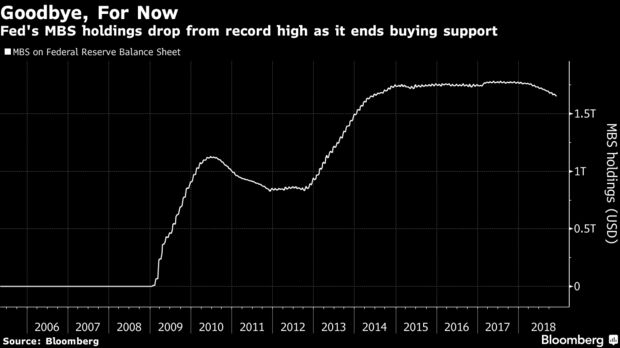
Investors in agency mortgage-backed securities will find next year to be “anything but smooth sailing” as Fed rate hikes and balance sheet reduction will lead to an increase in real rates and volatility while pushing spreads wider, Bank of America Inc. MBS strategist team led by Satish Mansukhani write in a 2019 outlook report.
The key to 2019 sector performance will be the enthusiasm of relative value investors such as money managers to absorb the $375 billion demand gap created in part by the central bank’s exit. Compared to the pre-crisis era, money manager MBS holdings have declined $500 billion amid a $2.2 trillion growth in their assets under management. That suggests they are currently underweight mortgages.
This shift in sponsorship away from the central bank is likely to push spread volatility higher, though at its current level the MBS basis has already priced in a moderate increase. Combined with the retracement lower in real rates, Bank of America Inc. has shifted to a tactical overweight on mortgages. It sees an eventual widening of spreads and negative excess returns next year leading to a change to an underweight stance.
  • From 2014 to 2018 ~85 percent of outstanding MBS were in the hands of the Fed, domestic banks, insurance companies and overseas buyers, explaining the highly subdued spread volatility
    • Expect that to decline to 80 percent by end of next year on a combination of Fed runoff of $200 billion in 2019 from $150 billion this year, $228 billion in organic supply and forecast bank demand of $90 billion
  • Three big “ifs” for next year are trade wars, bank regulatory proposals and money manager positioning in corporates versus MBS
    • Escalation of trade war tensions may trigger a risk-off sentiment and increase the likelihood “for the Fed to exercise its put”
    • Wild card for bank demand is regulatory outcomes. Most notably the Treasury’s proposal to ease eSLR ratios at the bank subsidiary levels
    • Investor positioning and attractiveness versus credit all point to potential money manager demand

Saturday, December 8, 2018

Backdoor Lending: Subprime Work-Around That May Crush Your Retirement

The housing crash of 2008 is now 10 years in the rearview mirror, but the danger of another crisis lurks despite assurances to the contrary.
We’ve been told that the housing bubble and collapse was about predatory lending and high-risk borrowers who were duped into loans that they couldn’t afford. The massive regulatory response to the subprime crisis meant that banks were no longer allowed to behave badly. So they have chosen to behave differently – and that’s not a good thing, Pamela says.
“The largest source of mortgage lending in the United States is now being done by non-banks – financial entities that offer unsecured personal lending, business loans, leveraged lending, and mortgage services, but do not hold a banking license,” she says.
“As a result, they’re not subject to standard banking oversight and can engage in risky lending.”
Where do they get the money to make these loans?
Wells Fargo coughed up $81 billion; Citigroup and Bank of America ponied up $30 billion each; and JP Morgan threw in another $28 billion.
“By funding these ‘shadow’ banks, the big financial players are still in the risky loan business,”Pamela says.
Pamela notes we should be worried about startling facts such as these:
“It was precisely this type of non-transparent, under the radar, backdoor lending that led to the soaring foreclosures, cratering home values, failing banks and dwindling retirement accounts of a decade ago,” Pamela says.

Friday, December 7, 2018

How All Real Estate Transactions Will Move Online in Three Years

Technology is disrupting many industries because of its ability to improve and expedite many of the antiquated processes that stall efficiency. Paper documents and physical files are being set aside to allow for collaborative documents and cloud storage services. Desk phones aren’t ringing anymore — but chat and messenger applications and email inboxes are constantly (and consistently) full.
But it wasn’t until recently that technology finally penetrated into the core processes of the real estate and mortgage industries to offer any long-lasting, impactful value. Yet the process of purchasing a home and getting a mortgage is still more or less reliant upon physical paperwork, notaries, multiple personnel and even in-person meetings — all antiquated systems that do not promote efficiency.
Today’s buyer is immersed in technology, with the expectation that information and/or services are readily available thanks to their laptop or smartphone. They are well versed in user-friendly applications, cloud storage, and seamless file sharing — all of which needs to be adopted by the real estate world.
Thankfully, VCs and tech professionals are pushing for real estate advancements with mobile apps, search platforms, cloud services, blockchain and even AI. All of these tools, services, and technologies — coupled with new consumer expectations — are expediting the real estate market’s move to the online world.
More Buyer-Centric Search Tools These real estate tools and applications, more formerly known as “PropTech,” have shaken up the industry through a new wave of mobile applications, software, and mobile responsive websites that possess easy-to-use tools and digestible information. All of these advancements assist today’s buyer in getting more informed and more confident with the real estate market as they look for their new home.
The tools also get buyers more confident with using technology in the home searching, buying, and financing processes. In turn, buyers are seeking out additional online tools to support, enhance, and accelerate their home buying process.
An Online Portal to Improve Efficiency Because of this shift toward more internet-connected tools, there will be a demand for a place to access, organize, and collaborate on documents. To meet this need, an online portal will need to be created or integrated with a digital mortgage platform.
This portal will service the agent, loan officer and buyer by centralizing all tools into one place for easy access. Searching for homes, comparing realtors, and even getting preapproved for mortgages could all take place in one spot. It’s not so much of a one-stop-shop, however. It’s more of a place to connect and ensure the right hand is talking to the left hand and ensure that everyone communicates effectively so each person is on the same page. One of the biggest contributors to problems in real estate is communication, so clear and often communication is the key to a successful client experience.
Furthermore, the portal could host an individual user dashboard, where buyers could save their preferences, upload their individual documents, and communicate with their real estate agent of choice. It will help to integrate communication with the search process: chat, video calls, and emails will be supported directly in the portal to make for seamless communication between you and your buyer. Is your company adopting, developing and implementing this kind of tech?
With this easy access to data and a central place for communication, efficiency will be at an all-time high. No more scrambling through files or digging through emails. Everything will be streamlined to foster better organization and increased transparency. The next step will be getting all those who are part of the transaction integrated with the portal. You can’t close on a home within 48 hours without blockchain and cooperation from the banks and title companies.
A Buyer-Driven Process Consider this: in the near future, buyers will have access to more information about the housing market and mortgage lending industries. Therefore, the dynamic between industry professionals and the buyers will change as the process becomes more buyer-driven.
Buyers will be more confident in conducting the transaction process, and will likely take the lead role while you act more like a navigator instead of the director. They’ll want to be the ones who make the offer, playing an active role in the transaction. They will turn to you, their agent, for your expertise and negotiation tactics. This has already happened in many other industries.
There’s even a chance that blockchain will come into play in the buyer-driven process. Blockchain technology rose to prominence with cryptocurrencies, but the technology has the chance to disrupt many more industries, one of which is real estate. The technology establishes digital trust in a peer-to-peer network while providing complete transparency on each and every transaction. This type of tech could significantly (and positively) aid in an online buyer-driven process.
With more power shifting toward the buyer, now is the time to reassess the agent and loan officers role in the market while strengthening skills — particularly emotional and personal value — to keep from getting washed away by the wave of new technology.

CBRE: Here’s where multifamily investors should be putting their money in 2019

While most of the market attention tends to be focused on Class A multifamily buildings, new research from CBRE suggests that there is another class of multifamily housing that represents a much larger opportunity for investors – workforce housing.
According to CBRE, workforce housing, rental communities that are affordable for low- to median-income workers, has actually outperformed the overall multifamily market in each of the last four years, thanks to relatively low vacancy rates and above-average rent growth.
According to the report, approximately 13.5 million households currently live in workforce housing, most of whom are individuals and families who are “renters by necessity” because they are paying off student debt or perhaps saving to buy a house and do not have the financial means for homeownership or for higher-quality multifamily housing.
And going into 2019, market conditions are positioning workforce housing for continued return on investment.
“Slow wage growth over the past decade contributing to a high number of potential renters, an extreme lack of new supply, and limited alternative options mean strong and sustained demand for workforce housing apartments is expected to continue in 2019,” CBRE said in its report.
According to the report, workforce housing has brought in nearly $375 billion in investment over the last five years, more than 51% of the total for all multifamily asset classes.
But despite the capital coming from “unlikely sources,” including institutional and international investors, only a “small” amount of workforce housing has been built in the last 10 years, while many older apartment communities have been torn down to build new, luxury apartments and the like.
That means there’s an opportunity for both preserving existing and building new workforce housing.
“The multifamily industry removes more than 100,000 units per year due to obsolescence, and these are predominantly workforce and affordable housing units,” CBRE said in its report. “The redevelopment of older housing units is tremendously valuable to the multifamily sector, providing better-quality and updated units for renters. The physical improvement to the older multifamily housing stock has also made it more attractive for investors.”
According to the report, nearly all areas in the U.S. are benefiting from workforce housing’s “strong” market conditions, with Orlando and Las Vegas leading the way with 7% workforce housing rent growth in the last year.
But the workforce housing market is not without risks, specifically the ability of renters to be able to absorb any more rent increases when wages are not rising as quickly as rents.
“Workforce housing affordability has begun to create some resistance to rent increases and may limit them further in the future,” CBRE notes.
According to the report, more than one-third (35%) of workforce renter households were considered “rent burdened” last year, meaning their rent payments represented 30% or more of their incomes, compared to 21% in 2006.
Additionally, proposed rent control policies, like the one defeated in California last month, could also limit rent growth, while the wide array of public and private programs focused on trying to improve housing affordability may improve the supply/demand situation for renters at the expense of owners, CBRE said.
Despite that, Brian McAuliffe, CBRE’s president of Institutional Properties, Capital Markets, said that there is still a significant opportunity for investors if they’re smart.
“The balance of the market forces points to continued strength in workforce housing, justifying the strong investment appeal. Investment in this segment is also very good for the housing market by helping to preserve much-needed accommodation for lower-income renters,” McAuliffe said. “Value-add investment, in particular, helps to preserve workforce housing inventory directly by improving the physical quality of the asset through renovation.”

Fewer Americans are flipping homes — a bad sign for the housing market

While TV shows like “Fixer Upper” and “Flip or Flop” rule HGTV’s airwaves, few Americans are actually getting in on the home-flipping act these days.
In total, 45,901 single-family homes and condos were flipped during the third quarter of 2018, a 12% decrease from a year ago, according to a new report released Thursday by real-estate data firm Attom Data Solutions. That is the lowest number of homes flipped in a quarter since the first quarter of 2015.
Home flips represented 5% of all home sales recorded in the third quarter, which is the lowest level since 2016. “Home flipping acts as a canary in the coal mine for a cooling housing market because the high velocity of transactions provides home flippers with some of the best and most real-time data on how the market is trending,” said Daren Blomquist, senior vice president at ATTOM Data Solutions. “We’ve now seen three consecutive quarters with year-over-year decreases in home flips.”
The last time the housing market saw home-flipping activity peter out in this manner was in 2014, following the mortgage rate hikes in the second half of 2013. During the last housing crash, there were 11 consecutive quarters featuring declines in home flips between 2006 and 2008.
Although mortgage rates have decreased in recent weeks—providing buyers with some relief—experts remain concerned that the housing market could be entering a tumultuous phase. Inventory remains tight nationwide, which is keeping prices elevated and making it harder for buyers to find somewhere to live.
In some parts of the country, decreased demand on the part of home buyers has caused home price growth to slow dramatically, which could be an indication of falling prices down the pike. The potential for a recession in the years ahead further complicates the outlook for the housing market.
One major contributing factor driving the latest slowdown is the declining return on investment for home flippers. The average gross flipping profit in third quarter was $63,000, or 42.6% ROI, representing the lowest return since 2012. Moreover, a third of home flips sold for between $100,000 and $200,000 — and those properties on average generated only a 39% gross return.
Home-flipping activity also isn’t benefiting buyers like it once did. Only 12.7% of homes flipped in the third quarter were sold to buyers who had Federal Housing Administration-backed loans, many of whom were likely first-time home buyers. Once again, that figure represented a 10-year low.