Search This Blog

Wednesday, April 15, 2020

Transforming Space to Meet Healthcare Needs Amid Coronavirus

As healthcare organizations scramble to absorb the exogenous shocks of the 2020 COVID-19 pandemic, real estate providers have a unique opportunity to help them meet this moment by offering temporary space for a range of patient care needs and ancillary healthcare services.
The rapid deployment of more healthcare spaces is becoming critical given projections the US will be out of available beds in intensive care units by the end of April, with beds in medical-surgical units reaching full occupancy by mid-May.
Where under more normal circumstances, funding and regulatory requirements would be barriers to creating new healthcare spaces quickly, those traditional barriers are being torn down to meet this unprecedented challenge.
The $2 trillion congressional stimulus package, authorized by President Trump in March, includes an emergency fund for hospitals, a 20% increase in Medicare reimbursement for hospitals that care for COVID-19 patients, $1.3 billion for community health centers, and $16 billion for the national stockpile of emergency medical supplies.
And the Centers for Medicare & Medicaid Services has activated blanket waivers to help healthcare organizations meet the patient surge. For example, hospitals may now move patients between units, exceed typical limits on beds, and expedite Medicare provider enrollment.
Already, health systems backed by forward-looking public-private partnerships are setting up temporary field hospitals everywhere from Sacramento’s Sleep Train Arena to New York City’s Central Park. The Army Corps of Engineers has taken a leadership role in making this happen and is seeking space in numerous locations across the US.
But field hospitals alone can’t solve this problem. So commercial real estate leaders are also joining the effort with other creative solutions.
Take the United Center in Chicago, for instance, which will be a logistics hub for COVID-19 operations, used for food distribution, staging, and coordination for medical supply shipments. Chicago is also reopening shuttered hospitals, and opening up thousands of hotel rooms, some for infected first responders, others for less serious cases. And that’s only the beginning of the ingenuity we’re seeing across the industry–even RV donations are now being solicited to help house doctors and nurses.
From reopening vacant hospitals to repurposing hotels and sports arenas, the following are a few ways CRE leaders can help health systems meet this moment–whether your portfolio includes healthcare-specific space, or not.

Identify healthcare space that could potentially house patient care

Hospitals have very strict maintenance requirements, so the best options for direct care space will be facilities that have already housed healthcare in one form or another.
If your portfolio contains a dormant hospital, for instance, it may be possible to convert it into a working care environment. A few markers can help you assess its viability, including how long it’s been closed. A hospital that’s only been out of commission for a few months will generally prove simpler to reopen than one that’s been shuttered for years. Most temporary care sites are not designed to treat the most critical cases, so the logistics of transporting patients to the nearest hospital should their conditions deteriorate must also be considered.
Alternatively, do you have space to lease in a medical office building? A healthcare provider may be able to relocate rehab and outpatient surgery there, freeing up room in the hospital itself. When looking to expand space for care, however, do note that close proximity to the hospital system as well as equipment like crash carts will be vital.

Consider non-healthcare real estate to free up hospital space

From university dorms and hotels, to arenas and industrial warehouses, there are many ways non-healthcare space can help health systems absorb the shock of patient surge. This can include spaces designated to treat non-COVID-19 patients or isolate patients with mild symptoms.
Sports arenas and parks. Dodger Stadium, Hard Rock Stadium and the Charlotte Motor Speedway are a few examples of parks and arenas offering space for COVID-19 testing. They can also potentially offer sanctuary for homeless people, minimizing spread to the larger community.
Hotels and dorms. Clinical workers and first responders may need to stay closer to the hospital, in isolation from their families. Homeless communities could also be offered temporary housing in hotel rooms and dorms.
Some of these spaces could help more directly by housing COVID-19 patients with mild systems, but they would need to be retrofitted with new air circulation systems and carpet removal. Proximity to the central hospital would also be critical, as well as a strong patient security strategy, cleaning protocol, and onsite cooking facilities.
Industrial warehousing. With some hospitals converting onsite storage rooms for direct patient services, they need to identify more spaces off premises to transfer equipment, materials, etc. They may also need offsite space to collect and organize personal protective equipment and other much-needed supplies. All this adds to the appeal of more industrial storage space, particularly in facilities with strong management systems, like highly calibrated refrigeration, in place.

Make your space accessible, then available

There is no singular playbook to follow. Requirements will vary greatly depending on how any given facility will be used. The following questions can provide a starting point for your planning:
  • What type of space can you offer?
  • What potential uses may this space serve health systems now?
  • How quickly can you make this location available?
  • Can the facility be offered as is, or are you prepared to help convert it into usable space
  • What important boxes can you check in terms of proximity and appropriate building engineering systems?
You can also help our nation’s healthcare leaders by doing what you can to simplify the administrative process of leasing. Note that regulatory requirements and lease guidelines under the Stark Law could potentially be eased, so keep an eye out for any regulatory changes.
https://www.globest.com/2020/04/15/3-tips-to-transform-space-to-meet-healthcare-needs-amid-the-coronavirus

NYC Hospitality Alliance Unveils Its Plan for Economic Recovery


The NYC Hospitality Alliance has worked with a number of local business groups to develop what it calls a Blueprint to Save Small Business.
The plan consists of four key policies to resuscitate ailing small businesses and revamp the economy. These policies range from direct financial assistance for rent and mortgages for the duration of the shutdown to extending business interruption insurance to cover the COVID-19 pandemic and converting sales tax collection into cash grants for small businesses.
Specifically it calls for:
Insurance. Business interruption insurance claims related to COVID-19 should be required to be paid, or a specialized business recovery fund should be established to promptly pay claims to businesses required to close (or limit their operations), by government order. When necessary, the federal government must provide the insurance companies appropriate assistance.
Amending the Paycheck Protection Program. The Paycheck Protection Program of the CARES Act should be amended to allow the loan to be forgivable if businesses hire back needed staff at a minimum of six months after they fully reopen; allow a larger allocation of the money to be used for rent or other expenses; and, expand the stimulus funding so it is available over a longer period of time, so businesses who do not immediately apply can still obtain funding. Also, the group is calling for all participating banks to accept, review and qualify applications from any small business without requiring existing accounts or loans.”If these amendments are not made, the PPP will not help countless businesses that need stimulus funding.”
Sales Tax. The group says that it recognizes the State and City of New York face significant budgetary constraints, nonetheless, it is recommending investigating the fiscal implications of converting restaurants, nightlife establishments and retail stores’ sales tax collection into grants. These small businesses need an injection of cash to help them survive during the COVID-19 emergency, they say. “Since these monies are on hand, converting (and/or reverting) the sales tax collection into a grant, will help small businesses immediately with needed cash flow, and will stimulate economic activity.”
Rent and Mortgages. Due to the ongoing COVID-19 emergency, businesses and property owners face significant challenges, the group says. The majority of businesses in New York City have been mandated by the government to close (or limit their operations) and many therefore cannot pay their rent. Property owners have financial obligations including property taxes, mortgages, maintenance, and capital improvements – much of which is paid for by the rent from businesses.
“While we recommend that commercial tenants and property owners make arrangements per their circumstances to help both parties weather this crisis, we recognize that realistic terms may not always be available,’ it says. “Therefore, we recommend a government backstop be provided during this emergency. These government programs could include direct federal financial assistance, rent and mortgage forbearance, and/or a property tax deduction for landlords who provide rent concessions to their tenants.”
The groups that participated in this working document include the Bronx Chamber of Commerce, Brooklyn Chamber of Commerce, Greenwich Village Chelsea Chamber of Commerce, Manhattan Chamber of Commerce, NYC BID Association, New York City Hospitality Alliance, NYS Latino Restaurant, Bar & Lounge Association, New York State Restaurant Association, Queens Chamber of Commerce, Staten Island Chamber of Commerce, Tech:NYC and The Real Estate Board of New York (REBNY).
https://www.globest.com/2020/04/15/nyc-hospitality-alliance-unveils-its-plan-for-economic-recovery/

NY real estate firm works to expand Mt. Sinai’s coronavirus treatment capacity

Riding to the rescue at a desperately needed Mt. Sinai Beth Israel hospital expansion, Hudson Yards developer Related Companies brought in an army of workmen to make more than 400 new beds available to COVID-19 victims.
Mt. Sinai started shrinking the number of beds at its curved-façade building at 281 First Ave. at East 16th Street in 2017 to prepare it for an eventual sale.
Fewer than 400 of the original 825 beds remained in use when Gov. Cuomo on March 23 ordered hospitals to double capacity as the death toll mounted and swelling admissions threatened to overwhelm facilities.
Mt. Sinai officials wanted to add beds quickly but realized they couldn’t retrofit unused rooms fast enough. They reached out for help to Related CEO Jeff Blau, who’s on the hospital board.
Blau responded with boots on the ground within 36 hours.
“What needed to be done was electrical and HVAC work,” a Related spokesman said. “We redeployed construction execs from Hudson Yards as well as our own contractors.”
Thanks to Related’s reinforcements, work that might have taken up to three months longer was completed almost overnight. The hospital was able to open 210 additional rooms in a matter of days and will add 220 more within two weeks.
All the new rooms are equipped to handle COVID-19 cases, although it wasn’t known how many victims were being treated in the reopened rooms. But any newly available rooms take a load off older ones and ease the strain on the system.
Blau said, “Related is about serving our communities and that’s never been more important than it is now. We were glad that when we were asked to help, we could jump into action immediately and leverage our development expertise from Hudson Yards to expedite the delivery of hospital rooms when our city needed them most.”
https://nypost.com/2020/04/13/real-estate-firm-related-companies-helps-mt-sinai-beth-israel-hospital-build-space-for-400-new-beds-for-covid-19-patients/

Tuesday, April 14, 2020

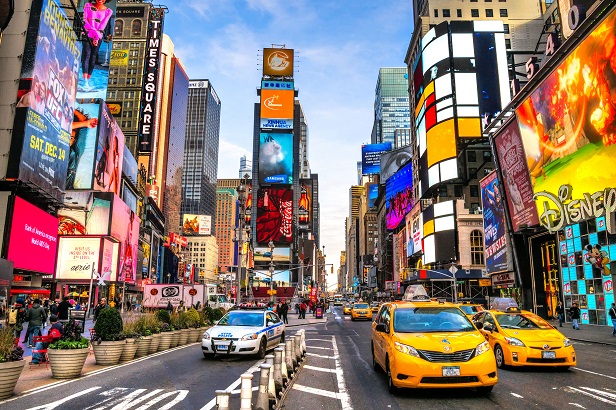
Times Square hotel first to seek CMBS loan servicing during Covid-19 pandemic

The first in what’s expected to be a wave of pandemic-battered CMBS (commercial mortgage-backed securities) hotel loans in the city sent to special servicing is at the Hotel at Times Square, according to CMBS market monitor Trepp.
Borrowers for the 260-room boutique property at 59 W. 46th St. “requested a 90-day forbearance due to the COVID-19,” reports Trepp. The $34.8 million loan matures in May 2023. The borrowers of record are Wentworth Hotel LLC and Wented Realty Corp.
A number of larger Big Apple hotels were under debt strain even before the virus struck — largely due to overleveraging while overproduction of new rooms was pushing down revenue.
But the Hotel at Times Square is the first CMBS borrower to need special servicing specifically because of the coronavirus outbreak.
“Travel has been shut down due to the COVID-19 and the collateral property has been hit hard,” according to special servicer Key Corp.
Trepp Managing Director Manus Clancy said the West 46th Street property was “a struggler to begin with,” but its plea for a 90-day extension “is of a piece with the wider situation. Everybody’s trying to get their arms around it nationwide.
“How many hotel owners aren’t going to be able to make payments? Ten percent? Thirty percent? Everybody’s holding their breaths.”
Clancy said the Hotel at Times Square “is one of many dozens in every market that will go down this path. I owe X millions of dollars and I have no income. I need time.
“It wouldn’t shock me if we have five or 10 more this week,” he said.
Trepp is closely watching whether borrowers are making April payments on nearly $856 million in total CMBS loans at properties including the Soho-Tribeca Grand portfolio, Courtyard Midtown East, Hilton Times Square, Hilton Garden Inn on West 54th Street, Westin Times Square, the Standard High Line and a seven-property portfolio that includes Holiday Inns on Wall Street and in Times Square.
Clancy said payments totaling about $250 million have been made for April at the Refinery, The Mark and a Holiday Inn on Sixth Avenue.
Cushman & Wakefield hospitality industry specialist Tom McConnell explained that CMBS loan trustees have less leeway than balance-sheet lenders, and that when CMBS borrowers ask for postponements, it automatically triggers special servicing.
https://nypost.com/2020/04/13/times-square-hotel-first-to-seek-cmbs-loan-due-to-coronavirus/

Monday, April 13, 2020

Prime Healthcare Rescues Los Angeles-Area Hospital


Courtesy of Prime Healthcare
Prime Healthcare has received approval from the U.S. Bankruptcy Court for the Central District of California in Los Angeles to acquire St. Francis Medical Center, a 384-bed health-care facility in Lynwood, Calif. Prime will purchase the Los Angeles-area property from Verity Health System in a $350 million transaction.
Founded in 1945, St. Francis occupies 14 acres at 3630 East Imperial Highway. The campus has grown to encompass approximately 600,000 square feet of buildings ranging in size from roughly 37,000 to 222,000 square feet, according to Los Angeles County records. Today, the hospital is the site of one of the largest private emergency trauma centers in L.A. County.
Per terms of the asset purchase agreement, Prime will pay a $200 million base price for St. Francis and the hospital company will also invest approximately $47 million in capital improvements. The court-supervised transaction is on track to reach completion, pending regulatory review and other closing conditions. Prime has a history of rescuing distressed hospitals. In 2013, the company acquired Landmark Medical Center in Woonsocket, R.I., and the Rehabilitation Hospital of Rhode Island in North Smithfield, effectively ending five years of financial hardship for the properties, which had become insolvent in 2008. Since 2005, Prime has invested more than $1 billion in capital improvements and equipment at its properties.
https://www.infabode.com/hubs/general-california-alternative-sectors/hub_posts/179553

Sunday, April 12, 2020

Thousands of affordable apartments on ice as ‘essential’ construction shuts down

The construction of thousands of below-market-rate apartments in New York City has been put on hold over coronavirus — even though the developers are allowed to continue building amid the outbreak, The Post has learned.
While construction on buildings with affordable housing has been deemed “essential” work that may continue under Gov. Andrew Cuomo’s ongoing PAUSE order, developers have opted to halt 28 such projects citywide, according to the city’s Department of Housing Preservation and Development.
“I felt that in this environment it was better to err on the side of caution,” L+M Development Partners CEO Ron Moelis told The Post of his decision two weeks ago to halt his company’s seven current construction projects set to yield more than 1,600 rent-regulated units.
“Even though there are ways to keep these sites safe, I erred on the side of not putting [workers] at greater health risk, especially as we’re in the peak of this. We’re operating in an unknown environment. We’re trying to do the right thing,” he said of L+M, one of the city’s major affordable-housing developers.
Two of the company’s projects set to house low-income and formerly homeless New Yorkers in East Harlem and East New York were nearing completion before the-pandemic hit New York but will now be delayed, said Moelis, adding it’s tough to balance worker safety with the city’s deep need for low-income housing.
“I don’t know that there’s a right answer in this situation,” he said.
The 100-unit Linwood Apartments in East New York will house 30 formerly homeless New Yorkers as well as 70 low-income households, while the East Harlem site will soon have 400 rental apartments for people making at-or-below the New York Metropolitan Area’s median income.
He also said it’s unlikely that he’d opt to start L+M’s projects back up in short order.
“The earliest I could see is the end of the month, and that’s optimistic,” he said.
The construction halt comes after Gov. Cuomo on March 27 put a temporary stop to the building of market-rate housing, as well as hotels, while deeming emergency repairs, some infrastructure projects, and housing developments with at least 20 percent of the building dedicated to affordable housing “essential.”
Still, developers are not required to keep building “essential” projects, officials said.
“The need for affordable housing is critical, and that need will be even greater on the other side of this pandemic,” said city Housing Department spokesman Jeremy House. “Developers of essential affordable housing are allowed to continue construction if they choose, but only if they can ensure the safety of construction workers and the public.”
Among the other developers that have chosen to temporarily stop construction are Greenland Forrest City Partners, which is building Pacific Park in Brooklyn, and TF Cornerstone, the developer of Hunter’s Point South, spokespeople confirmed.
The controversial Pacific Park project is expected to yield 2,250 total below-market-rate apartments over the next five years. TF Cornerstone’s Long Island City waterfront project will have more than 700 such homes once it’s completed.
Councilman Brad Lander, who was among the leading voices calling on the state to shut down “non-essential” construction, said building low-cost rental apartments will be particularly important in the coming months as the city grapples with an economic downturn.
“We need to bring more affordable housing units online quickly,” he said. “I think that should be a high priority.”
He added that while ideally every planned low-cost apartment will be completed soon, “you’ve got to be safe.”
The majority of affordable-housing developments where ground broke on the construction sites before the coronavirus pandemic have continued on. As of April 3, there were 327 “essential” residential projects still being worked on, non-profit news site The City reported.
Moses Gates, a housing guru at the Regional Plan Association think tank, said that the ramifications of halting housing construction are minimal — as long as the break doesn’t last more than a few months.
“Pausing construction for a month or two is not going to hugely affect the construction timelines and viability of the developments,” he said. “There are some issues you need to work out with the contractor, the financing, and the city, but nothing that should be that difficult to overcome.”
“But if you have to pause a construction site for a year, it starts to become more difficult to restart afterwards.”
https://nypost.com/2020/04/12/thousands-of-affordable-apartments-in-limbo-as-essential-construction-stops/

Saturday, April 11, 2020

Virtual tour of these NYC cultural institutions from home


New York City Institutions Close To Public Amid Coronavirus Scare
New Yorkers are spending more time at home than likely ever before, as the novel coronavirus pandemic has led to limits on how many people can gather in one place at any given time, and the widespread closure of the city’s myriad cultural institutions.
But many of those institutions—museums, parks, performing arts centers, libraries, and more—have risen to the challenge, providing virtual access to their buildings and collections. In a challenging time, these virtual experiences offer New Yorkers many ways to stay entertained and connected to the city’s plethora of incredible cultural offerings.
Below, find a list of what’s available from various online platforms, museums, and more.

Museums

Several New York City museums can be experienced via Google’s Arts & Culture platform, including the Met, the Museum of Modern Art, the Brooklyn Museum, and the Cooper Hewitt. In addition to providing a glimpse at those museums’ collections, the platform also lets you explore their buildings—so if you’ve never visited Frank Lloyd Wright’s nautilus-inspired Guggenheim building, now’s the time to do so (virtually).
In a partnership with the New York Latino Film Festival, each week El Museo del Barrio will feature shorts, films, and documentaries from the fest on its website. The American Museum of Natural History is sharing previously recorded tours via its Facebook and Twitter accounts. History buffs can listen to more than 350 oral histories from New Yorkers on the Coney Island History Project’s website in addition to exploring their online collections.
Many city museums have also shared items from their collections using the hashtag #MuseumAtHome and #MuseumMomentofZen on Twitter—both are good to follow if you need a moment of levity in the middle of a stressful time.

Libraries

Though New York City’s library branches are closed, many of the services that they provide—including access to e-books, research materials, and more—are available digitally. See what’s available via the New York Public Library, Brooklyn Public Library, and the Queens Public Library.

Parks

Many city parks remain open, but one of the most popular outdoor spots—the High Line—has closed for now. But you can still go on a virtual tour of the elevated park through Google Arts & Culture.
The New York City Parks Department offers virtual tours of some of its flagship green spaces, including Central Park and the Staten Island Greenbelt.
And the Natural Areas Conservancy has a nifty online map that charts the more than 20,000 acres of the city’s natural areas—forests, freshwater wetlands, salt marshes, and streams—if you’re hankering for some outdoor exploration without actually going outdoors.

Bonuses

The New York Landmarks Conservancy has a video series called “Tourist In Your Own Town,” which takes viewers on tours of historic landmarks (including President Theodore Roosevelt’s birthplace and the Dyckman Farmhouse Museum).
The city’s Landmarks Preservation Commission has launched Seneca Village Unearthed, an online exhibit and collection of artifacts from what was once New York City’s largest community of free African-American landowners. The exhibit offers access to nearly 300 artifacts for a glimpse of what life was like for Seneca villagers in the mid-19th century.
Urban Archive is another resource chock full of digital resources to explore in partnership with 40 museums, cultural organizations, and government agencies. The archive offers a seemingly endless collection of curated historic images and their histories. For instance, as part of the #NewYorkfromHome campaign, the Municipal Arts Society and Urban Archive create two digital tours: Epidemic, New York in 1918, and Hospitals through History.
The 92nd Street Y has also made videos from its archives available to watch at home, and will livestream some of its planned concerts.
In the first in a series of online shows created for the Pace Gallery, the digital exhibit Saul Steinberg: Imagined Interiors brings together drawings, collages, and photographs by New York-based cartoonist and illustrator Saul Steinberg. The show explores interior spaces as sites for introspection and creativity, and will be on view online until April 6.
https://ny.curbed.com/2020/3/17/21183837/virtual-museum-tours-home-new-york-moma-met