Search This Blog

Saturday, November 17, 2018

Amazon’s LIC developers signed $300M deal to buy nearby site


Amazon’s Long Island City developers, TF Cornerstone, signed a $300 million deal to buy a nearby development site just last week.
The Post has learned the developers, which are the most active in the area, having built hundreds of apartments in the new towers along Center Boulevard, will buy an eight-acre triangular site along the north side of Newtown Creek — a few short blocks south of the Amazon project at 46th Road.
The 326,000 square feet of land at 55-01 Second St. is bounded by 54th Avenue to the north and Vernon Boulevard to the east.
The pricing equates to $187.50 per buildable foot and the developer will have to demolish the current buildings and put in all the infrastructure such as sidewalks and sewers.
It is expected to support four, 400-feet-tall towers with more than 2,000 rental apartments. Under current City rules, about a third of them would be affordable.
Brokers say Amazon’s future influx is already pumping up the demand for apartments, which had stalled, and will now drive up housing prices and rents in the area.
The site has been marketed for over a year by Jimmy Kuhn, Jennifer Schwartzman and David Noonan of Newmark Knight Frank, as The Post first reported.
The Elghanayan family’s TF Cornerstone had previously been selected by the City to develop its land and will now develop the entire new office project for Amazon that will include the adjacent land owned by Plaxall.
The City’s site had been targeted for 1,000 apartments with about a quarter of them affordable while Plaxall’s project was to get just under 5,000 with about 1,250 affordable. Under Amazon’s plan, those units won’t be built.
TF Cornerstone is currently developing 1,200 apartments on Parcel C at Hunter’s Point South, which is the block bordered by Center Boulevard, Borden Avenue, Second Street and 54th Avenue.
While the choice is obvious for the new Second Street land purchase, which is catercorner to its Parcel C, the signing of the sales contract just days before the official Amazon announcement stands out, especially with TF Cornerstone aware there would be big demand coming and fewer apartments in the pipeline.

Friday, November 16, 2018

Tiny houses to make Philadelphia debut on city land

Philadelphia is on track to begin construction of prefabricated tiny houses in Kensington, a new strategy for the city that advocates say could dramatically improve the region’s ability to respond to a growing shortage of decent, low-cost housing.
If the plan comes to fruition, it will be the Philadelphia debut of a housing type that has captured the imagination of everyone from reality TV producers and HGTV junkies to minimalist architects, and advocates seeking to end homelessness.
With support from two City Councilmembers, a team of advocates led by Villanova University professor Stephanie Sena plans to construct a model unit on a 700 square-foot city-owned parcel of land at 2147 Orleans Street in Greater Kensington. A $75,000 no-interest loan to a nonprofit led by Sena, Student-Run Emergency Housing Unit of Philadelphia, is paying for the pre-fab home. The loan will come from the personal bank account of Councilman Allan Domb.
Councilman Domb “sees our work as an answer to rising housing prices,” said Sena, who teaches history. “We’ve applied for many grants and had a lot of success, but there are many corporations and funders that tell us they need to see a model first. This one property on Orleans Street will be the model we can use to get the funding we need to get more properties.”
On Tuesday, the City Council’s Vacant Property Review Committee approved the parcel’s transfer from the Philadelphia Land Bank to Sena’s group. On Thursday, Councilman Mark Squilla introduced a resolution in City Council to approve the transfer. To complete the process, Squilla’s resolution will have to be voted on and then, assuming the legislation moves forward, the Land Bank’s executive board will give final sign off at their December meeting, transferring the tile from the city to the nonprofit.
    • A lot on Orleans Street in Kensington will be the site of a prototype of a new kind of small prefab rowhouse. (Kimberly Paynter/WHYY)
      A lot on Orleans Street in Kensington will be the site of a prototype of a new kind of small prefab rowhouse. (Kimberly Paynter/WHYY)
Sena and her team plan two different forms of tiny homes in Philadelphia. The model home on Orleans Street will be a rowhouse infill designed to blend in with nearby houses. They hope to build 14 similar rowhouses if they are able to acquire more land on the block. The small size and prefab nature of the houses will allow them to be sold at a price point affordable to low-income residents who want remain in appreciating neighborhoods, Squilla said.
“The costs of our affordable housing has been astronomical,” the Councilman said. “The tiny house proposals are a way to increase the number of affordable units at a reduced cost. We look at this as a viable option for keeping communities affordable as we continue to develop our neighborhoods.”
The other housing type reflects Sena’s original vision of tiny detached homes where people transitioning from homelessness could live with pets, which aren’t allowed in traditional shelters. These detached homes, Sena said, could be placed in areas of the city like Kensington where there are acres of unused formerly industrial land in need of new uses.
Both the rowhouse models and the detached homes would weigh in at about 650 square feet and $85,000 in building cost per unit, the professor said.
    • Stephanie Sena is a professor at Villanova University and is working with the city to build tiny houses for the homeless.(Kimberly Paynter/WHYY)
      Stephanie Sena is a professor at Villanova University and is working with the city to build tiny houses for the homeless.(Kimberly Paynter/WHYY)
Once the model home is built on Orleans Street, Sena plans to fund further construction with a mix of grants and donations from corporations and individuals. She has already raised $25,000 in donations through GoFundMe. Once units are assembled, rental income or profit from sales could also help fund more development, although Sena wants to keep some of the homes under the control of her non-profit so people transitioning out of homelessness can be continually serviced.
But while city officials appreciate Sena’s specific vision, they see tiny homes as an answer to the city’s larger affordable housing issue. Domb said his office has been studying the tiny house concept for years as a way to avoid the astronomical costs of building new affordable housing units in Philadelphia, where construction costs are among the highest in the nation.
“To take people out of homelessness we need to put them into affordable housing and I thought this was a better solution than spending $418,000 on an affordable home,” said Domb, who also owns one of the city’s top real estate brokerages. “I volunteered to lend, interest-free, $75,000, plus anything else that might be needed, in order to get the program off the ground. I felt that could cut out the red tape so we could get started right away.”
The inspiration to bring tiny houses to Philadelphia came to Sena in 2017 after years of helping to arrange seasonal shelters for homeless people in church basements under the auspices of Student-Run Emergency Housing Unit of Philadelphia. She saw that people who have pets are routinely turned away from homeless accommodations unless they put their animals in animal shelters where they are often put down.
Sena figured the best way to help her clients would be to create a shelter of her own, where they could have privacy, keep their pets, and access social services. That dream took on more definition when she read about, and eventually visited, tiny house villages in cities like in Eugene, Oregon. In these city-sanctioned places, formerly homeless individuals lived with their pets and enjoyed access to community centers, education, and health services.
That idea would require a lot of money and connections, neither of which Sena had at that point. That changed quickly with the help of friends, including Lucy Noland, an anchor at Fox 29. The idea began to take on a life of its own as she and Noland ran into key players around town, talking to Deputy Mayor for Labor Rich Lazer at a dinner party and Mayor Jim Kenney at a Billy Joel concert. There with the piano man in the background, Noland pitched Kenney on tiny houses, Sena recounts.  She said Kenney offered to put the women in touch with Anne Fadullon, his administration’s director of development and planning.
In the fall of 2017, Sena met Squilla, who quickly expressed support for the concept. Another friend of hers pitched Domb on the idea. Sena said she has also successfully pitched the city’s powerful building trades unions, with union leaders volunteering free labor for the initial pilot project. Union representatives did not respond to requests for comment.
It was through conversations with city officials that Sena and her team expanded the idea beyond villages of tiny detached homes like the ones she saw on the West Coast to infill projects that would fit better in Philadelphia’s dense neighborhoods.
“Our goal is that as you walk down the street and look at the streetscape, you aren’t going to be able to tell the difference between the new structures and the old,” said Anthony Belfield of Resource Control Consultants, Sena’s construction manager. “We aren’t going to put a single-family lot into an area that is predominantly city rows.”
The prefabricated homes Sena wants to plant in Kensington, and other Philadelphia neighborhoods are built with structurally insulated panels. Though the standard unit is 650-square feet, the homes can be expanded or contracted to fit the needs of a particular lot. Belfield said they would be assembled in Connecticut by DBLS Homes, and transported to Philadelphia on a 40-foot flatbed trailer, where the prefabricated, pre-wired panels can then be assembled.
The construction process could be reduced further because assemblage of the homes could also happen at the factory in Connecticut while a foundation is built and plumbing installed on the lot in Philadelphia. It’s through cutting the construction process down to a minimum and keeping labor costs low that the houses are able to go up for dramatically less money than standard homes in the city.
Sena hopes to house one of her current homeless clients in the pilot unit. But moving forward,  most of the homes planned for Orleans Street and other infill sites will not be earmarked for people transitioning from homelessness, she said.
“We’ve discussed if we could have one of Stephanie’s current clients, who maybe has trade skills and is down on his luck, we could put him into the sample unit,” said Belfield. “That hasn’t been fully fleshed out, but it’s an option. From a strict standpoint, the infill housing is meant to be affordable housing, while the stand-alone housing is more the homeless option because of the pet need.”
Sena says she hopes the village project for homeless people and their pets will be able to start construction at the same time as the full infill project. But Belfield estimates they are about a year out from obtaining site control and beginning the construction process on the first village. That’s partly because the 1.5-acre city-owned parcel they are eyeing at 3809 Frankford Avenue is zoned for industrial use and would need to be remapped, among other complications.
There is still time for things to go wrong. Sena said her original site for the tiny home village, outside Squilla’s district, got defeated by community activists who didn’t want homeless services in their neighborhood. It remains to be seen how civic associations will react in the area where Sena now plans to build. Sena said she’s met with neighbors on Orleans Street and that they are amenable to the infill idea. The plan for the full project includes a food bank, for both pets and their people, which the entire community would be welcome to use.
“It’s the same process we do with any kind of development: we try to work on a compromise to allow it to happen,” said Squilla.  “Sometimes we can’t find one and it doesn’t happen. Sometimes it is modified for a specific community. And sometimes they have to see a project somewhere else before they’ll support it.”
  • Avatar
    there are houses all over that area, “Real””regular” row houses, two stories, selling for less than $20k. how does an $85k tiny house make sense? You could rehab lots of those houses for less than $85k.
  • Avatar
    Ms. Sena’s plan of these as an option for transitioning people from homelessness is a great one, but these shouldn’t be proposed as the solution for affordable housing in Philly. Maybe I’m being cynical, but it sounded to me that this was where Domb was heading. ‘Tiny homes’ are predominantly a novelty for a niche of people usually able to afford typical housing, but instead opt to live in these tiny houses, which people than gawk at on TV. Then they stick them in some picturesque location on an over-sized lot, of which a strip of land in Kensington certainly isn’t.
    That said, if these could be laid out as in a row-home plan, especially if it didn’t have a noticeable reduction in height and size, they could be an innovative solution for transitioning the homeless. But if a 650 sf home starts being floated as a solution for families in need of affordable housing, then we need to figure out how fix the cost of building. Cramming people/families into tiny homes under the justification that it’s better than homelessness isn’t the answer.

How have home buyers, sellers changed?

Nevermind the heartfelt personal letters. For aspiring home buyers in today’s cutthroat housing market, the secret to success is no secret at all: money, and lots of it.
Buyers who successfully close on a home are making more than they ever have before, with a median $91,600 household income, according to the National Association of Realtors® 2018 Profile of Home Buyers and Sellers. That’s up from $88,800 last year and $88,500 the previous one. And they need every cent to close on a home at a time when a lack of inventory and rising mortgage interest rates are pushing the cost of homeownership up to new heights.
NAR surveyed nearly 7,200 buyers who purchased homes between July 2017 and June 2018 to come up with its findings.
“Affordability has been such a problem, but the buyers entering today do have higher incomes,” says Jessica Lautz, managing director of survey research and communication at NAR. They’re the ones “who are able to compete in a multiple-bid situation. [And] for them to be able to qualify for a mortgage today, they have to have a higher income.”
The market is beginning to shift as more homes are making their way onto the market. That’s giving buyers more choice and slowing the out-of-control price appreciation of the last few years. But prices aren’t going down.
The median home price was $250,000 this year, up nearly 6.4% from $235,000 last year. It’s not just prices that are going up. Buyers are plunking down the largest down payments in more than a decade—a median 13% of the purchase price, compared with 10% a year earlier. That’s the highest it’s been since 2005.
“Even with a thriving economy and an abundance of job opportunities in many markets, monthly student loan payments coupled with sky-high rents and rising home prices make it exceedingly difficult for potential buyers to put aside savings for a down payment,” NAR Chief Economist Lawrence Yun said in a statement.

Who’s buying what—and which properties are the hottest?

Just about every buyer wants to know who they’re up against in the marketplace. So here goes. Buyers were a median 46 years old and had a median household income of $91,600. Not too shabby.
Whites made up the overwhelming majority of buyers, at 85%. Hispanics bought 6% of homes closed on last year, followed by blacks, at 5%, and Asians at 4%. About 3% of buyers identified as “other.”
Married couples made up the bulk of buyers, at 63%. Single women came in second, purchasing 18% of homes for the second year in a row. Meanwhile, single men only made up about 9% of buyers.
But bachelor buyers tended to purchase more expensive homes, at a median $215,000, compared with single women, whose median home price was just $189,000. Married couples shelled out the most, at a median $289,000.
For that kind of money, the vast majority of buyers want the quintessential American home: a detached, single-family house, usually with a yard out back. In fact, the typical home purchased was built in 1991 and had two beds, three baths and clocked in at a median 1,900 square feet.
About 8% of buyers purchased a townhouse or row house, while just 4% opted for a condo or duplex. Across all types of homes, only about 14% were newly built.
Most homeowners don’t need more space, as only about a third of buyers (34%) had children under the age of 18 living with them. (Only about 12% of buyers closed on a multi-generational home for themselves and their aging parents and/or their adult children.)
The lack of young kids is “changing what people need in a home and need in a neighborhood,” says NAR’s Lautz. “They don’t necessarily need for the perfect school district because they don’t have a child they need to cater that to.”
And it’s not just kids, or the lack of them, that are increasingly a factor in home buying. About 15% of buyers said their pets influenced their decisions. They wanted to make sure their homes were convenient and had appropriate outdoor space for their pets.

First-time buyers vs. the housing market

Everyone keeps talking about these first-time buyers who make up about about 33% of all buyers, down from 34% the previous year. So who are they? Well, for starters, they tend to be older millennials with a median age of 32. More than half are married (54%), and they have a median household income of about $75,000.  And they bought homes of about 1,600 square feet worth a median $203,700 last year.
“With the lower end of the housing market—smaller, moderately priced homes—seeing the worst of the inventory shortage, first-time home buyers who want to enter the market are having difficulty finding a home they can afford,” Yun said.
First-time buyers put down a median 7% down payment, up from 5% the previous year. This is the most they’ve contributed upfront since 1995. And many of them are receiving financial help from their families, says Lautz.
“Wealthier families are able to help their children enter homeownership,” she says.
But they’re still opting for cheaper locales.
About 48% bought in the suburbs, followed by 20% who preferred small towns and another 20% who chose more expensive urban areas. An additional 11% chose rural areas, while just 1% bought in resort and recreation areas.

It’s all about location

So where do buyers want to be? The suburbs, it turns out. More than half of buyers, 51%, opted for the ‘burbs. They were followed by small towns, at 20%, urban areas, at 14% and rural areas at 14%. (Just 2% opted for resort and recreation areas.)
And buyers aren’t going far. They only moved a median 15 miles from their old home to their new one.
At the top of their minds was the quality of the neighborhood. That was followed by how convenient it was to get to that home from work and how affordable it was.
Once they settled on the perfect home in the perfect neighborhood, they planned to stay put. They expect to stay a median 15 years in their newly purchased abodes, with about 19% saying they’ll never leave.

So who is selling these homes and moving out?

Buyers need to understand their competition if they’re going to get a leg up over them. But they should also know who’s putting these properties on the market.
Sellers tended to be a bit older than buyers, with a median age of 55. They also made a little more, with a median household income of $98,800.
They tended to have lived in their homes for nine years. Although they had a variety of reasons for selling, chief among them were that their current home was too small, they wanted to be closer to family and friends, or they had to relocate for work.
These homes tended to fly off the market, going under contract within a median three weeks. And the owners made bank on the sales, with a median $55,500 profit over what they originally paid for their homes.

Driving Less, Taking Public Transport Less: What That Means For Real Estate

The post-war rise of the car led to the boom of the suburbs and of out-of-town shopping malls. South London is built on tough-to-tunnel-through sandy soil rather than North London’s clay, meaning it has fewer underground lines, and so is less densely populated (and poorer).
The world’s great cities are built on coasts and rivers because of the access by boat that provides.  The way we move around the world today is changing rapidly, pushed by technological and social changes, and this will again shape real estate.
Car journeys in cities are dropping, but so are public transport journeys, and yet cities are becoming more populated. Ride-sharing apps are proliferating and can be harnessed by developers. Electric cars are changing what mixed-use schemes can deliver.
Here are key themes about the future of transport and mobility that real estate professionals of every stripe need to look out for, as outlined by a panel of experts at Bisnow’s London State of the Market event this month.
Public transport journeys are dropping, but not all such journeys are equal
Earlier this year it was revealed that overall journeys on Transport for London fell in 2017, and Arup Chief Economist Alexander Jan said this trend is being mirrored in major cities across the world. But TfL Head of Strategy and Outcome Planning Lilli Matson pointed out that commuter trips had remained constant: It was “discretionary journeys” that had fallen.
“You can see a correlation with more retail and leisure services being consumed in the home,” she said. “That has a big effect on the transport network in that we’re seeing a growth in van traffic serving that new market.”
She said that means there are constants as well as changes that the transport network needs to plan for. The same is true for real estate, with journeys to offices remaining constant, but retail and leisure continuing to be challenged.
Not everyone can work from home or move to a hipster location
London & Continental railways chairman Lorraine Baldry made the salient point that technology like shared autonomous vehicles might make real estate like car parks obsolete, but it will make a lot of professions like car mechanics obsolete, too. The young people in particular that would have gone into professions like this need to be retrained.
Also, while people with nice big houses, with studies and open-plan kitchens, can work from home, not everyone is so lucky, so the transport system needs to be able to cope with those people who don’t have the luxury of working from anywhere they want.
Public bodies want fewer cars, more affordable housing and to open up new areas
TfL has been mandated by the U.K. government to increase the amount of development it is undertaking in and around its stations, and Matson said  there are some key points that the real estate world should note.
Firstly, as a public body with a mission to promote “good growth” these developments would have to comprise a significantly higher proportion of affordable housing than developments on private land. In more central areas especially, TfL would be specifically looking to create schemes that reduce the reliance on cars and promote walking and cycling.
And it would also be looking to create dense developments around non-central stations with speedy connections to central areas, to open up new districts for commercial and residential use that had previously been seen as too on the fringes. Development around stations is only going one way: mixed-use In terms of how that development around transport nodes will be undertaken, it would seem that mixed-use is the only way to go.
Baldry pointed out that King’s Cross Central in London, one of the global exemplars of a development around a transport hub and in which LCR is a joint venture partner, has been developed “so that once you come in to the station, anything you could possibly need, be it offices, shops or restaurants, is in walking distance, and that is very appealing  to businesses”.
She said education played a key part in launching these schemes: The first occupier at King’s Cross Central was the Central St Martins college.
To be seen as progressive, you need good transport
Cities and companies increasingly want to be seen as progressive and forward-looking as they compete with each other for investment and for the best and brightest young workers. Transport is now central to this, and that is something real estate needs to bear in mind, especially those involved in large-scale development.
“If you’re going to talk about a progressive scheme, then thinking about transport progressively is central to that,” Savills Director of Global Occupier Trends Nicky Wightman said. “If you look at what Sidewalk Labs is doing in Toronto, mobility is central to that project. That is in no way unique, mobility makes a statement about whether a scheme is progressive: How are people going to get here, and what does this mean in terms of economic development?”
Electric vehicles could hasten new types of mixed-use
Can logistics or last-mile delivery facilities and residential ever truly be mixed, Jan asked, given the noise that trucks make? But Matson made the point that electric vehicles reduce noise significantly, and combining the two would reduce the competition for space in urban areas.
All new transport systems and developments need to factor in ride-sharing and other new tech
Uber Head of Cities for the South of England Eugenie Teasley produced an interesting stat: around 30% of Uber journeys begin or end at a public transport node.
“We know Uber isn’t the panacea, but we think it can be part of a wider public transport platform,” she said, and TfL’s Matson agreed, saying that all new public transport projects and indeed all real estate developments should be looking to integrate services like ride-sharing apps, bike and scooter shares, and walking and cycling options from their conception.
Developers need to collaborate early to harness the benefits of tech firms like Uber
One of the most interesting tie ups between a tech company and a real estate firm is that between Uber and U.K. multifamily developer Moda, where residents at the company’s schemes receive £100 a month in Uber credits if they agree to forgo a parking space. Teasley said the scheme is set to be extended beyond an initial few developments, but that the collaboration needs to be “thoughtful and undertaken early in the development process” to be most effective. But overall, it could be part of a positive movement toward reduced private car ownership.
Start thinking about super fast elevators
One futuristic possible transportation innovation will spur a need to drastically improve one element of buildings that are already a cause for much complaint. Flying taxis could be introduced by around 2025, Teasley said, which would bring about fundamental change in cities beset by gridlock like San Francisco or Rio de Janeiro.
In terms of the direct impact on real estate: “We’ll all need a super-fast elevator to get to the roof,” she said. Start factoring that in on new schemes now.

Thursday, November 15, 2018

Student Debt Reduces Home Buyers’ Budgets by Nearly $100,000

Carrying student debt, whether for themselves or someone else, limits potential home buyers’ budgets by $92,440, leaving fewer homes on the market they can afford.
The average monthly student debt payment for renters who plan to buy a home in the next year is $388, according to the Zillow® Housing Aspirations Report. The maximum priced home a buyer with student debt could afford is $269,400, if they spend no more than 30 percent of their income on combined housing and student debti. At this price point, they could buy 52.3 percent of homes currently listed for sale.
For a buyer with no student debt seeking to spend the same share of income, the buying limit would increase to $361,800, and they could afford to buy 66.4 percent of available homes nationwide.
Student debt reached record levels this year, with the total amount at $1.56 trillion in the third quarter of 2018ii. Paying off student loans also makes it harder to set aside money for a down payment, which is one of the top barriers to homeownershipiii. And saving for that down payment takes longer than it did for previous generationsiv.
“Higher education pays off when it comes to lifetime earnings and the long-term odds of homeownership, but carrying any kind of debt limits how much home buyers can afford. For today’s generation of young home buyers, who came of age in a period of rapidly rising education costs, student debt payments can delay the pace of down payment savings and put a dent in their max price point once they do decide to buy,” said Zillow Senior Economist Aaron Terrazas. “With for-sale supply still tightest for the most affordable homes but increasingly available at higher prices, even a small reduction in a buyer’s target price point can result in substantially fewer options.”
Nationwide, about one third (33.9 percent) of renters who are planning to buy a home in the next year have some form of student debt, whether it is for themselves or someone else.
Student debt plays the biggest role in housing affordability in Las Vegas, where buyers with no student debt can afford a much larger share of the homes for sale than those with student debt (57 percent versus 29.3 percent, respectively).
It makes the smallest difference in San Jose, California, where buyers with student debt can afford 11.7 percent of homes, compared with the 18.3 percent of homes that shoppers free from student debt can buy.

Wednesday, November 14, 2018

Empire Resorts enters into alliance with British betting giant

Aqueduct could be off to the races in future sports wagering as Empire Resorts — its parent company — has entered into a strategic alliance with Britain’s bet365 Group.
Shares of Empire Resorts World, which also owns Resorts World Catskills, soared 54 percent on Wednesday despite that fact that New York state hasn’t legalized sports betting.
Bet365 Group is the world’s largest online sports betting company with annual sportsbook revenue of more than $3 billion.
“Joining forces with bet365 positions Empire and our flagship Resorts World Catskills to lead a potentially enormous new market,” said Manny Pearlman, executive chairman of Empire Resorts.
The New York state market in legal sports betting is expected to be the largest outside of California. Boutique research firm Eilers & Krejcik Gaming estimates sports betting in the state will bring in more than $1 billion in annual revenue in the first years.
New York lawmakers are expected to review legislation next year in order to share in the growing pot of sports-betting dollars and taxes, according to reports.

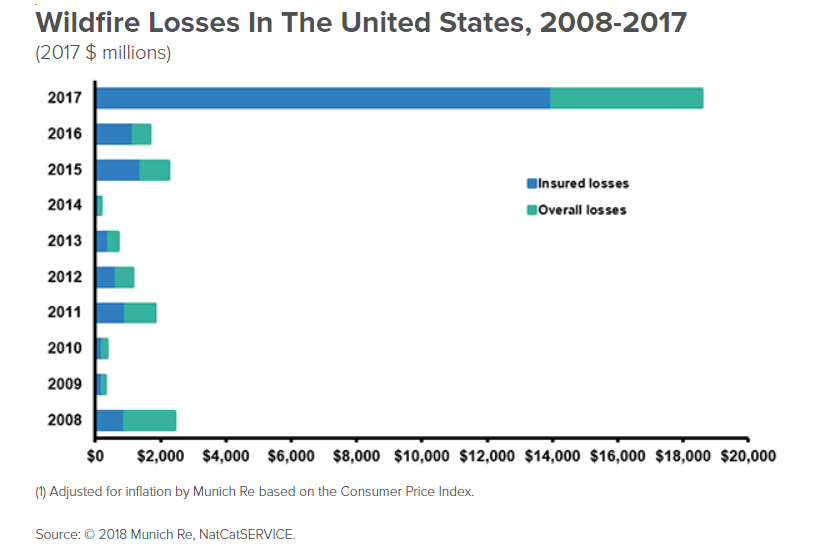
Take these next steps if your home has been destroyed by wildfire

Residents affected by the three fires scorching parts of California have yet another ordeal to contend with: beginning the homeowners’ insurance claims process.
Two of the blazes — the Hill Fire and the Woolsey Fire — ignited in southern California on Thursday, setting off evacuations, according to the Ventura County Fire Department.
Meanwhile, the Camp Fire moved through northern California on Thursday, forcing thousands of residents to flee and engulfing the city of Paradise.
All three of the fires continued to burn through on Friday.
The one bright spot for homeowners is this: As long as you’ve been paying your premiums, the standard homeowner’s insurance policy covers fire damage to your home, structures on your property and most of your belongings.
Certain specialty items, such as art or jewelry, might need a rider in order to be covered.
Here’s what you should look out for if you’re preparing to file an insurance claim after you’ve lost everything.

Document everything

The best preparation in advance of a disaster is to keep a “go bag” of important materials — including your insurance policies — that you can readily grab before fleeing, said Janet Ruiz, a spokeswoman for the Insurance Information Institute.
Maintain images of your belongings and your home, and keep these in cloud storage.
This is a way to provide your insurer with proof of the items you own and the condition they were in prior to the disaster.
In order to get your claim processed as quickly as possible after a disaster, be sure to report it to your insurer immediately and take note of your claim number, said J. Robert Hunter, director of insurance at the Consumer Federation of America.

Know your coverage

A plume of smoke rises above the Camp Fire as it moves through the area on November 8, 2018 in Paradise, California.
Understand the extent to which you have additional living expenses coverage as part of your homeowners or renters insurance policy.
This coverage foots the bill for hotel stays and meals in the event that your dwelling is uninhabitable. Insurers have coverage limits when it comes to paying for these costs, capping the amount that they’ll pay for or the applicable length of time, according to the Insurance Information Institute.
You may be entitled to money up-front for these costs, too, so be sure to keep your receipts, said Hunter.

Work on repairs

Your insurer will send a claims adjuster to assess the damage and it may recommend a contractor to provide you with estimates.
If you have a trusted local contractor, consider obtaining a repair estimate so that you have a guideline to follow when you’re talking to your claims adjuster, said Hunter.
Be aware that you’re not required to use your insurance company’s contractor, but you should obtain an explanation if there’s a difference in estimates.
It could come in handy if you have to negotiate with your insurer.
“If the insurance company’s contractor says that the damage estimate is $50,000 and your contractor it’s $55,000, you may ask that contractor to explain why,” Hunter said.
Watch out for fly-by-night contractors. Make sure that the company handling your repairs is insured and has good references, Hunter said.

Watch out for catches

Be aware that there could be limitations on your policy, too.
“If your whole house burned down, it used to be that you had guaranteed replacement,” Hunter said. “Insurers started to rethink this and apply an absolute limit on what they will pay.”
For instance, a homeowners policy that covers the “replacement cost” of your home will pay out the cost of replacing your damaged home with a similar dwelling in the current market.
However, some companies may cap that replacement cost at 20 percent over the face value of the policy: If your replacement value is $1 million, then the most your insurer will cover is $1.2 million.
This can be a problem amid a disaster when labor and building materials are in high demand.
“If you have a lot of damage in a large area and hundreds of homes damaged, you may have a surge in prices,” said Hunter.
He also warned that insurers may not cover the extra cost of bringing your damaged home up to new building codes, including upgrading your wiring or elevating the dwelling to curb flood risk.
If you disagree with the resolution of your claim, take your complaint to your insurer’s consumer relations department.
You can also escalate your complaint to your state insurance department or see a lawyer, said Hunter.
Keep detailed notes of your interactions with the insurance company, as you may need them in the event of a dispute, he said.