Search This Blog

Saturday, August 25, 2018

AirBnb To Open Up to 14 More Home-Sharing Buildings by 2020

In a joint venture with development company Niido, Airbnb is set to debut a company-branded building in Nashville, Tennessee, with many more in the works. The latest almost-hotel project will be the company’s second announced Airbnb-branded building, and will lease apartments to a hybrid of long-term renters and short-term visitors. The concept, called “Niido Powered by Airbnb,” is part of a larger push by Airbnb to team up with real estate developers and facility managers, a group that has frequently argued that the home-sharing company enables renters to illegally sublet their apartments. In December, Brookfield Property Partners LP agreed to invest as much as $200 million into Niido’s efforts to turn residential apartment buildings into Airbnb-branded complexes.
According to Bloomberg, the new project is a takeover of an existing 328-unit building, called the Olmsted, in the SoBro neighborhood of downtown Nashville, a popular tourist destination for music lovers and bachelor parties. Under Niido’s new ownership, current residents of The Olmsted will be encouraged to sublet their units to Airbnb travelers for a maximum of 180 days per year. Airbnb and Niido will take 25 percent of the income the residents generate from home-sharing. The two companies will jointly rent a portion of the remaining vacant units through Airbnb’s platform for short-term stays.
By the end of 2019, Airbnb and Niido will open as many as 14 Airbnb-branded complexes across the country, said Cindy Diffenderfer, co-founder and chief marketing officer for Niido Powered by Airbnb. “We have a pretty aggressive growth strategy,” Differnderfer said. As part of a push to broaden its appeal to more up-scale clientele, Airbnb has added more hotels and hotel-like listings under the label Airbnb Plus. Those sites get regular visits from an inspector to confirm towels are fresh, sheets are matching and that appliances commonly found in hotels, including hair dryers and irons, are stocked. Working in partnership with real estate developers like Niido will help Airbnb offer a more hotel-like experience while operating out of homes and apartments.

Ikea’s Small Stores: A Win for Retail CRE Landlords?

When one thinks of an Ikea store, the last thing that likely comes to mind is small.
After all, its mega furniture stores average about 300,000 square feet in the United States, and due to its selective store footprint, some people travel from long distances to shop at Ikeas and even plan a whole day to shop there.
That could change if plans the retail giant has across the Atlantic come to fruition in the United States, though.
Ikea goes small
Instead of its traditional stores on the outskirts of major urban centers, Sweden-based Ikea now plans to hit inner cities. The first store is scheduled to open in the fall, on London’s Tottenham Court Road. Square footage of this store and others to follow, so far only announced in the London area, was not released, but these new stores will obviously be much smaller than its iconic yellow and blue mega big-box locations. Focusing on bathrooms and wardrobes, the store will be geared toward urban customers and reportedly allow them to make purchases of other items online in store and have them delivered.
The company did not release details beyond the London store and that it is seeking other sites in that metro area, but it called its small-store efforts in city centers a “global” approach, which one can assume will eventually include the United States because of its strong following in this country.

Plenty of Stateside Ikea plans in the works

This month, Ikea is making a marketing push in urban areas. This month it is launching the Ikea Inspiration Experience in Chicago and New York City, which is a pop-up display that lets customers walk into rooms that are featured in its 2019 catalog. Additionally, it is having “pop-up catalogs” in other urban areas that are 10 feet by 10 feet.
Meanwhile, Ikea is slowing its new store openings, at least in its traditional large formats, in favor of bolstering online sales in an effort to fight declining revenues. However, the retailer is constructing its second Virginia store, in Norfolk, which will total 331,000 square feet and open in the spring of next year. It will be its 50th U.S. location.

Big boxes shrinking and going urban

If Ikea makes a sincere push into urban areas, it will follow other large-format stores that have done the same over the years and moved from the suburbs to the city.
One of the first big moves was by The Home Depot, when it opened a store in Manhattan in 2004. Since then, many other big retail names have done the same. Target is in the works to open about 130 smaller format stores in urban areas which are between 20,000 square feet and 40,000 square feet. Kohl’s, Walmart and Whole Foods Market have done similar initiatives. Grocer Trader Joe’s has long lines that are legendary in Manhattan and other urban areas.
If Ikea were to make a big push into U.S. city centers, it would no doubt be welcome by landlords. Entire shopping centers are built nearby Ikea’s large-format stores in order to benefit from the huge amounts of traffic the retailer brings in. Its 403 stores globally have 936 million visitors between them annually, averaging 2.3 million per unit. Urban stores will likely be a big hit with urban-dwelling consumers who are used to traveling long distances to reach Ikea’s suburban big-box locations and will no doubt garner plenty of foot traffic.
That will not only benefit the landlords of Ikea-leased buildings but also those nearby with retail spaces for which there will be a spike in tenant demand to be near the retail giant’s smaller-format locations.

Friday, August 24, 2018

Wells Fargo lays off more than 600 mortgage workers

Wells Fargo is laying off more than 600 workers as it grapples with a slowdown in its mortgage business, a bank spokesman said on Friday.

The fourth-largest U.S. bank has given 60 days notice to 638 mortgage employees across the country, Wells Fargo spokesman Tom Goyda said in an emailed statement, with cuts concentrated in Orlando, Florida; Ranch Cordova, California; Colorado Springs, Colorado, and Charlotte, North Carolina.
“After carefully evaluating market conditions and consumer needs, we are reducing to better align with current volumes,” Goyda said.
Wells Fargo has been making sporadic cuts to its mortgage workforce as part of a bid to rein in costs. These layoffs are the largest so far this year.
The home lending business has struggled as rising interest rates hurt refinancing demand. Wells Fargo’s mortgage banking income fell 33 percent in the second quarter from a year earlier.
The latest cuts were mainly to retail fulfillment and servicing jobs, Goyda said, reflecting a continued slump in application volumes.
Analysts have said such moves address overcapacity and will improve the bank’s efficiency.
Wells Fargo has vowed to cut $4 billion in costs by 2020 in order to grow profits as it operates under a punitive asset cap levied by the Federal Reserve.

Fannie, Freddie will stop backing single-family rentals

Fannie Mae and Freddie Mac, the government-sponsored enterprises that help lubricate the U.S. mortgage market, will stop backing loans for single-family investment homes in a nod to the growing controversies surrounding that marketplace.
The Federal Housing Finance Agency, regulator of Fannie  and Freddie, announced Tuesday that both companies would end pilot programs which were intended to “test and learn” best practices in a market that’s exploded in the aftermath of the financial crisis.
“What we learned as a result of the pilots is that the larger single-family rental investor market continues to perform successfully without the liquidity provided by the Enterprises,” FHFA Director Melvin Watt said in a statement.
“I was glad to see this decision, I think it was a responsible decision and I’m looking forward to continued engagement with (Fannie and Freddie) over ways in which they might modernize traditional investor financing,” said Julia Gordon, executive director of the National Community Stabilization Trust.
Gordon and other housing observers have criticized the enterprises’ decision to get involved in a market in which investors don’t seem to have much trouble raising funds from traditional capital markets sources. The first such step was in 2017, when Fannie guaranteed a $1 billion deal for Invitation Homes , which was then controlled by Blackstone, even as the giant asset manager was preparing an initial public offering.
“I am perplexed to see Fannie Mae place a taxpayer guarantee behind the same private interests whose risky practices led to the millions of foreclosed homes they are now buying up,” Gordon’s organization said in a statement at the time. “These investors so far have had no trouble financing the purchase of tens of thousands of homes without government support.”
But advocates have also increasingly become concerned about the business practices of the institutional investors who’ve decided to become landlords. A recent Reuters report documented extensive, chronic issues for Invitation Homes tenants.
“I think it’s becoming increasingly evident that many of the actors in the single-family rental market pose risks to anyone who’s involved with them,” Gordon told MarketWatch. “We’ve seen a number of newspaper articles and investigative reports that indicate we may need to do some hard thinking about how these landlords are operating in the marketplace. When you have that kind of reputational risk, there’s downside.”
Whether Fannie and Freddie are involved or not, the single-family rental space is likely to continue growing as a part of the housing market. Institutional investors became interested after the housing crisis, when homeowner distress left plenty of homes to be scooped up on the cheap, and when many Americans’ bruised credit or job histories kept homeownership out of reach.
But since then, other, smaller investors have followed the big players. That phenomenon was documented by MarketWatch last month.
And on Tuesday, the National Association of Home Builders noted that the market share of single-family homes built as rentals increased over the past four quarters, to 42,000 from 29,000 over the prior four quarters.
But as the builder group noted, “the primary source of single-family rental homes is not construction but the existing housing stock. In fact, from 2005 to 2015, 56% of the gains in the rental housing stock were due to increases of for-rent single-family homes.”
The National Association of Realtors on Tuesday issued a statement commending the FHFA’s decision. “By financing the purchase of thousands of single-family homes for institutional investors to use as rentals, Fannie Mae and Freddie Mac compounded on inventory shortages and affordability concerns, which are holding back prospective homebuyers across the country,” the industry group said. “NAR applauds today’s FHFA decision, and we look forward to continue working with Fannie Mae and Freddie Mac to help more Americans achieve homeownership going forward.”

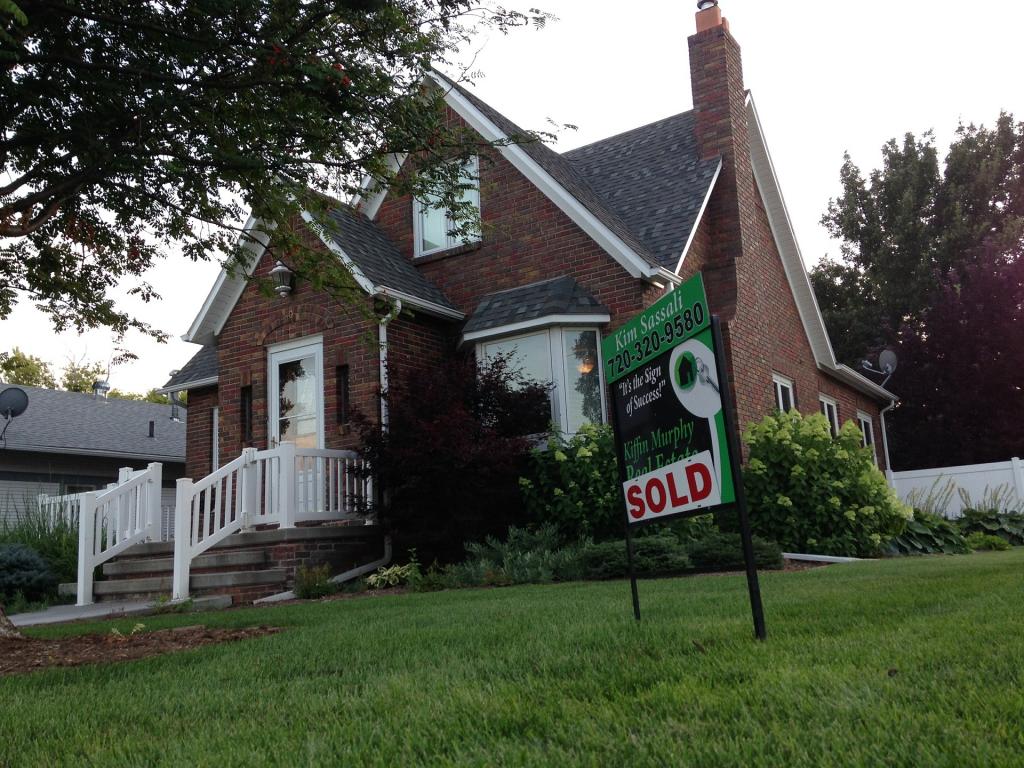
Renters Vs. Buyers: Who Has More Money Left Over?

Renters Vs. Buyers: Who Has More Money Left Over?
How much discretionary income do you have left after you’ve paid the monthly bills? Would that change if you were a homeowner instead of a renter, or vice versa?
PropertyShark and RENTCafé considered this question with a study of 52 urban areas. Using data from the Census Bureau and the U.S. Department of Labor, discretionary income was calculated by subtracting basic living costs and housing costs from the median family income in each city. Discretionary income represents your pool of potential savings.
According to the study, homeowners fare better than renters when it comes to having extra discretionary income.
Six of the homeowner markets averaged a monthly debt instead of an income, ranging from a $67 deficit in New Orleans, LA, to a $1,219 monthly loss in Miami, FL. Memphis, TN (-$146), Philadelphia, PA (-$719), Cleveland, OH (-$842), and Detroit, MI (-$905), round out the areas with homeowner deficits.
On the other side of the ledger, 58 percent of the homeowner markets show monthly discretionary incomes over $1,000 and three markets have discretionary incomes over $3,000. Manhattan, NY, leads with $4,692, followed by San Jose, CA, at $3,501 and Washington, DC, at $3,285.
The story is very different for renters. Only twelve of the 52 markets show any discretionary income at all, led by Virginia Beach, VA, at $883. The next highest figure is Austin, TX, at $265. Eleven of the renter’s markets have a monthly debt over $1,000, and two have monthly debts over $2,000: Boston, MA, with a $2,244 deficit and Brooklyn, NY, at $2,091 in the hole.
The PropertyShark study’s conclusion — buy a house to increase your savings — seems strange, but in urban markets where rent can take up large chunks of your income, this logic makes sense.
If you have enough money to be able to afford a home, your household is probably at or above the median income level and you can handle monthly mortgage payments — or you’re older and have already paid off your home. Conversely, if you’re renting, you’re more likely to be at or below the median income level but are still making high rent payments that take up a larger share of your income.
Renters are generally at a disadvantage, since the majority of mortgage loans have fixed interest rates while rents continue to rise. Once a homeowner gets beyond the down-payment-saving phase and actually buys a home, they can enjoy predictability in their housing costs.
How can renters bridge this gap? The obvious way is to find a job that pays considerably more than the median income, but that’s not practical for many urban residents. Renters who aspire to be homeowners will need to take exceptional measures in most cities, such as doubling or tripling up in the same rental space or consider moving to a lower cost-of-living market that still provides a suitably high wage.
The use of median incomes may be skewing homeowner data, given that all of the top five cities for homeowner savings also have high median household incomes (over $9,000 per month). However, homeowners still tend to struggle in certain markets because of very low median household incomes and relatively high costs of living (such as Miami).
How does your household compare? Regardless of your income or your home ownership status, if your discretionary income is low — or outright non-existent — it’s time to revisit the budget and make some changes. With some planning and discipline, you can accumulate more savings at the end of the month. What you do with your savings is up to you.

Sunday, August 19, 2018

America’s Homes Are For Rent

Want to know a primary reason for our housing market’s severe inventory shortage? Check out the percentages of single-family homes around the country that are not for sale and are not owner occupied:
During the housing crisis, Wall Street investors and companies such as Blackstone, America 4 Rent, HomeUnion and Investable (as well as “mom and pop” investors who bought 1-5 homes near where they lived) scooped up thousands of homes in foreclosure at fire-sale prices. Those investors and businesses fixed up those homes and put them back on the market to rent, not to fix, flip and sell.
Fast forward to today. Those initial players in the rental market are now joined by companies such as Roofstock, a leading tech platform that offers long-distance investors an opportunity to buy single-family home rentals anywhere in the US.
According to ATTOM Data Solutions, there were 43,329 renter-occupied housing units in Quarter 2 2018. That number remained basically unchanged from Q2 2017 and Q2 2016. ATTOM also indicated that the gross annual yield is +10.3%, including an annual 5% vacancy factor, for single-family rental (SFR) owners.
Many SFR owners own their properties in areas often thousands of miles away from where they live and pay rent. Those SFR owners can’t afford to buy homes where they live so they pay rent to work and live in those top tiered markets with the income generated from their tenants living in their SFR homes.
Outfits such as Roofstock make it “easy “ to become a SFR owner. The platform offers potential investors exact address, inspection reports, tenant occupancy histories, current rent information, neighborhood quality reports, information about property taxes and maintenance fees, local property managers and local construction services networks so owners can negotiate jobs and fees for onsite work and services the owner might want or need.
Daren Blomquist, senior vice president of ATTOM, cautions potential owners of SFR properties that “…most of the markets good for buying rentals aren’t going to be good for price appreciation. Don’t expect Seattle from Cleveland or Memphis…SFR owners are not going to build a long of home equity fast. “
Blomquist advises potential investors to hold on to SFR properties for as much as 20 years to realize a return. “(Investors) are best off holding (SFR properties) for the long term in order to realize increasing cash-flow returns they should be able to get as rent rates rise over time.”

Saturday, August 18, 2018

Mapping Philly’s 15 historic districts

The City of Brotherly Love is steeped in history, with more than a dozen specific areas certified historic. These areas within the city, from Rittenhouse-Fitler Square to Society Hill, achieve the designation for their collection of historic resources that are linked either geographically or thematically, according to the Philadelphia Historical Commission. If a property is located in a historic district, any proposed changes to it are subject to review by the commission.
That said, it’s not easy earning this designation, which may explain why there are only 15 historic districts* in the city, and we’ve mapped all of them here. One of them, 420 Row in Spruce Hill, became the 15th historic district in early January 2017, seven years after the last designation.
It’s just one interesting way to learn about Philadelphia, through the lens of these small districts, which include everything from a midcentury modern development in Northeast Philadelphia—the first racially integrated in the city—to an enclave of Tudor homes in East Falls.
We’ve included the boundaries of each district, and if you want to learn more about each one, the website link will take you to the official nomination document.
*Editor’s note: The districts are listed in order of the year they were designated, beginning with 2017. We did not include the historic district titled “Historic Street Paving” since the sites are scattered throughout the city.

1. 420 Row

411 S 42nd St
Philadelphia, PA 19104
Philly’s newest historic district is 420 Row, a collection of eight ornate homes on the west side of 42nd Street in University City. It was just added to the Philadelphia Register of Historic Places in 2017. The three-story homes were designed and built by G.W. and W.D. Hewitt in the early 1880s, and was the first Queen Anne-style development in Spruce Hill.
Boundaries: 420 to 434 S. 42nd Street
Google Streetview

2. Awbury

999 E Haines St
Philadelphia, PA 19138
Much of Awbury Arboretum encompasses this district, but it also includes 25-plus structures, many of them that have ties to the prominent Cope family. The Copes first began their purchase of the land in 1849.
Boundaries: Ardleigh Street, E. Haines Street, Devon Place, and Avonhoe Road in Germantown
Courtesy of Awbury Arboretum’s Facebook page

3. East Logan Street

39 E Logan St
Philadelphia, PA 19144
Also in Germantown is the East Logan Historic District, which was designated historic in 2010. This collection of 30 structures dates back to as early as 1729, when one of the first residences was built. Today, it includes a mix of single-family homes, carriage houses, and industrial buildings, as well as the Hood Cemetery.
Boundaries: From 14 E. Logan Street to the south, 53 E. Logan Street to the west, 213 E. Logan Street to the north, and 92 E. Logan Street to the east.
Courtesy of Wikimedia Commons

4. Tudor East Falls

3400 Midvale Ave
Philadelphia, PA 19129
Within the East Falls neighborhood sits a series of streets lined with 210 Tudor-style homes that were built from 1925 through the 1930s by developer Michael J. McCrudden. The idyllic homes, for the most part, appear relatively untouched. It was added to the register in 2009.
Boundaries: The 3400 blocks of Midvale Avenue, West Penn Street, and West Queen Lane
Courtesy of Christine Edwin

5. Parkside

Parkside Ave & N 41st St
Philadelphia, PA 19104
The Parkside Historic District sits on the edge of Fairmount Park in Philadelphia and dates back to 1890. That’s when a group of builders decided to take advantage of the extension of public transportation to the neighborhood and the success of the Centennial Exposition in Fairmount Park. Today, there are numerous architecturally significant structures that line the block of Parkside Avenue, designed by architects like Willis G. Hale (of the Divine Lorraine) and J.C. Worthington, among others.
Boundaries: Parkside Avenue at N. 41st Street to 4262 Parkside Avenue, northwest to 4281 Viola Street, southwest to Viola Street.
Courtesy of historic nomination

6. Greenbelt Knoll

19 Longford St
Philadelphia, PA 19136
Greenbelt Knoll in Northeast Philly started out as a collection of 19 midcentury modern homes—one has been lost since—built in 1956 by Morris Milgram, the leader of the open housing movement in the U.S. It became the first racially integrated housing development in Philly, and one of the first in the country. The neighborhood design was led by Robert Bishop, who was inspired by Frank Lloyd Wright, and Louis Kahn was a consultant.
Boundaries: Surrounded on three sides by Pennypack Park and runs along Longford Street.
Courtesy of Wikipedia

7. Old City

Interestingly, Old City, once home to many of America’s founding fathers, was not designated a historic district until 2003. The district dates back to as early as 1676, and today is home to some 800 structures that include residences, churches, old banks, institutions, and commercial office buildings—all rich in history.
Boundaries: Independence NationalHistorical Park at the south and west, the Vine Street Expressway at the north, and theDelaware River at the east.
Photo by Melissa Romero

8. Spring Garden

N 24th St & Wallace St
Philadelphia, PA 19130
Today, Spring Garden District is a mix of quaint and picturesque homes, but before it was simply farmland. The first major building boom occurred on this land in 1858, with the rise of horse-drawn street car services to the area. Much of the architecture was Greek Revival and Italianate style. It wasn’t until the next construction boom starting in 1877 that builders began to experiment with other architecture styles, ranging from Second Empire to Queen Anne to Beaux Arts.
Boundaries: Fairmount Avenue, Spring Garden, N. 15th Street, and N. 24th Street
Flickr/Alexis Lewis

9. Franklin Delano Roosevelt Park

1400 Pattison Ave
Philadelphia, PA 19145
Formerly known as League Island Park, FDR Park was designed in 1912 by Frederick Law Olmsted, Jr., son of the famed landscape architect. As the nomination states, the park features typical Olmsted features: “A wide expanse of field greets visitors as they first enter the park; the flow of each earea is subtly separated for specific activities, and the lack of any one site or piece of architecture is viewed for its individual beauty.”
The park is about to undergo a project to remake it into an “urban oasis,” which means—among other things—structural repairs and repaving.
Boundaries: Southwest corner of Broad and Pattison streets, west to 20th Street, east to I-95 to Broad.
Wikimedia Commons

10. Girard Estate

S 17th St & W Porter St
Philadelphia, PA 19145
This L-shaped South Philly district is named after Stephen Girard, who was once the richest man in the U.S. and the owner of a country home, Gentihommiere, which remains standing. Father and son John and James Windrim designed 421 dwellings on the land beginning in 1906, a mix of styles including Bungalow, Prairie, Mission, Colonial Revival, Jacobean Revival, Tudor Revival, and Craftsman.
Boundaries: Shunk, Porter, South 17th, and South 22d Streets.
Wikimedia Commons

11. Society Hill

The Society Hill Historic District, designated in 1999, contains one of the largest collections of 18th- and 19th-century buildings in the nation, from Colonial to Federal to Georgian dwellings. It has maintained its historic fabric over the years, with very little development, save for a development boom post-World War II that includes the Society Hill Towers by IM Pei. The historic district also includes Washington Square West.
Boundaries: See the official map here.
Photo by Melissa Romero

12. Diamond Street

N Broad St & Diamond St
Philadelphia, PA 19122
Diamond Street District exists because of the population boom in Philly during the 1850s. All of the elaborate structures, including Second Empire and Victorian rowhomes and Gothic Revival churches, were built between 1875 and 1897, namely for the “new rich” of North Broad. Per the nomination, “The row houses and churches of Diamond Street represent one of the most grand and stylistically intact avenue of Victorian architecture in the City of Philadelphia.”
Boundaries: Diamond Street from Broad to Van Pelt streets.
Courtesy of Library of Congress

13. Rittenhouse/Fitler Square

S 22nd St & Ludlow St
Philadelphia, PA 19103
The Rittenhouse-Fitler Square Historic District has, for the most part, been an exclusive residential neighborhood centered around one of William Penn’s original squares. It’s rich in architectural history, given that many of the wealthy families who built homes here hired famed architects like John Haviland, Horace Trumbauer, and Frank Furness to design their brownstone mansions. It was one of the first districts that earned historic designation, in 1995.
Boundaries: It’s complicated, so here’s the official map.
Photo by Kate Devlin

14. Park Avenue

1830 N Park Ave
Philadelphia, PA 19122
Like its neighboring Diamond Street District (#12), Park Mall (or Park Avenue) was a result of the North Broad industrial boom of the late 19th century. Per the nomination, Park Avenue housed some of the best preserved examples of speculative housing built for the middle classes in North Philly. But today, it’s nearly unrecognizable as Liacorous Walk, part of Temple University’s campus. The photo above shows the 1800 block of Park Avenue being demolished in 1959 to make way for Liacorous Walk.
Boundaries: 1800 to 1946 Park Avenue
Conwellana-Templana Collection, Special Collections Research Center, Temple University Libraries

15. Main Street Manayunk

Main St
Philadelphia, PA 19127
Just five miles from Center City, it’s common to feel world’s away from Philly when on Main Street in Manayunk. The district was the first to be designated historic in 1984, recognizing the area’s historical significance as a town on the Schuylkill River, heavily influenced by the canal to this day. Mill buildings dating back to the 1840s and 1850s remain, while Main Street has become a lively retail and restaurant corridor.
Boundaries: Reading Railroad to the east, Flat Rock Dam to the north, lots 4025-6 to the south, and Schuylkill River to the west.
Wikimedia Commons