Search This Blog

Monday, September 29, 2025

Fannie and Freddie: Multi-Family Delinquency Rate Highest Since Housing Bust (ex-pandemic)

 Freddie Mac reported that the Single-Family serious delinquency rate in August was 0.56%, up from 0.55% July. Freddie's rate is up year-over-year from 0.52% in August 2024, however, this is below the pre-pandemic level of 0.60%.


Freddie's serious delinquency rate peaked in February 2010 at 4.20% following the housing bubble and peaked at 3.17% in August 2020 during the pandemic.

Fannie Freddie Serious Deliquency RateFannie Mae reported that the Single-Family serious delinquency rate in August was 0.53%, unchanged from 0.53% in July. The serious delinquency rate is up year-over-year from 0.50% in August 2024, however, this is below the pre-pandemic lows of 0.65%.

The Fannie Mae serious delinquency rate peaked in February 2010 at 5.59% following the housing bubble and peaked at 3.32% in August 2020 during the pandemic.

Sunday, September 28, 2025

A year after Hurricane Helene, communities and businesses are rebuilding with resilience

 Seventy-nine billion dollars. That’s the official estimate of the destruction left behind by Hurricane Helene as the first anniversary of the storm is marked this weekend in communities across the southeast.

North Carolina bore the brunt of the storm. The death toll of 108 was the highest of any state, and the damage of $59 billion was three-quarters of the storm’s total. Official totals, though, can’t begin to describe all the impacts of the storm, which are still being felt in the many communities where the hurricane raged.

My family is from Western North Carolina, and there the hurricane’s power was intensified by the very Appalachian Mountains that natives believed had protected them from such disasters in the past. This time, the opposite was true. Mountain ridges and ravines funneled water into floods and mudslides so quickly that some people had no opportunity to escape.


Cleanup efforts in Spruce Pine, North Carolina, after Hurricane Helene.

Cleanup efforts in Spruce Pine, North Carolina, after Hurricane Helene ravaged the region in 2024.

That is what happened to the Guinns. Jamie Guinn shared how his wife of 10 years, Melissa Guinn, was buried by a mudslide that also destroyed their home in Elk Park, North Carolina. The couple and their 9-year-old son, River, carefully watched the river that night just 20 feet below their house. Though the river surged, Jamie says he felt safe.

What he didn’t know was that the hillside above him had destabilized. When Melissa asked him to get something from the garage, he opened the door to find the garage was gone. After that, things moved quickly. Jamie and his son were thrown into the river as their house broke apart over their heads. Melissa disappeared into the rubble and mud.

Jamie is putting the pieces of his life back together and recently moved his two sons into a new home.

"Honestly, I just try to live minute by minute and make sure they are OK. As long as they are OK, I am good," he says.

In Swannanoa, North Carolina, Daniel Wright and his family partnered with Beloved Asheville to rebuild their storm-damaged house. He’s hoping construction will be done in time to allow his family to celebrate Christmas in their new home.

He says the help he received from his community and volunteers restored his faith in what was possible.

"It’s peace of mind to know that somebody’s got you all the way to the end of walking back into your house and hanging things on your walls," he says.

The storm also shuttered the area’s many small businesses. According to Mountain Biz Works, 83% of businesses closed down after the storm for an average of 42 days. Most have reopened, but not all.

In Spruce Pine, North Carolina, Helene sent the Toe River jumping its banks and washing into the small towns many shops and boutiques on Lower Street. David Niven and his wife Trish lost their 21-year coffee shop business, DT’s Blue Ridge Java, to that flood, which swamped the floors with several feet of mud. David describes his first look at the shop as "horrifying."

"When you lose everything, you’re a little bit numb. So, we were. We cried a lot. We didn’t know where we were going… We didn’t know if we could rebuild," he says.


DT's Blue Ridge Java in Spruce Pine, North Carolina.

DT's Blue Ridge Java after Hurricane Helene ravaged the Spruce Pine, North Carolina, area in September 2024. (DT’s Blue Ridge Java / Fox News)

But David and Trish persisted. The two worked night and day to clear the site and rebuild. With the help of the local community and volunteers, many of whom David had never met before, the site slowly came to life. He and his wife took out a loan from a local organization and today, their restaurant is open again for business and thriving. The store expanded.

Throughout western North Carolina the need continues. Gov. Josh Stein recently requested $20 billion from federal coffers. But even that large sum won’t pay for all the damage. Stein estimates the total gap in funding at $45 billion.

But again, numbers don’t tell the story. It’s the faces and families that matter most. My own family is from Spruce Pine, only a few miles from DT’s front door.

And, what I know of this region is that it will be the people who live here who will solve their toughest problems, never giving up until they do.

https://www.foxbusiness.com/lifestyle/year-after-hurricane-helene-communities-businesses-rebuilding-resilience

Thursday, September 25, 2025

US Existing Home Sales Stuck Near 15 Year Lows As Prices Keep Rising

 Following yesterday's surge in new home sales (thanks to a huge wave of incentives from homebuilders), existing home sales brought us back to earth with a 0.2% MoM decline (better than the 1.4% MoM drop expected)

Source: Bloomberg

The total existing home sales SAAR dipped back to 4.00 million, hovering near the lowest levels since 2010...

Source: Bloomberg

The median sales price, meantime, rose 2% from a year ago to $422,600, extending a string of straight year-over-year gains since mid-2023, NAR data show.

Prices remain out of reach for many Americans, having risen more than 50% since the pandemic.

“Home sales have been sluggish over the past few years due to elevated mortgage rates and limited inventory,” NAR Chief Economist Lawrence Yun said in a statement.

“However, mortgage rates are declining and more inventory is coming to the market, which should boost sales in the coming months.”

There is certainly room to run for sales if mortgage rates sustain this decline...

But the question remains - why haven't existing home sales already moved?

Existing-home sales in the South, the country’s biggest home-selling region, decreased 1.1% to an annualized rate of 1.83 million. Sales saw slight gains in the West and Midwest, while they fell 4% in the Northeast.

Individual investors or second-home buyers purchased 21% of homes last month, compared with 20% a month earlier. And, first-time buyers accounted for 28% of closings, unchanged from July.

On the bright side, the affordability crunch, however, is slowly easing. Two-thirds of the US’s most populous metropolitan areas were buyer’s markets last month, meaning sellers outnumber buyers by at least 10%, according to research from online housing marketplace Redfin.

https://www.zerohedge.com/markets/us-existing-home-sales-stuck-near-15-year-lows-prices-keep-rising

Wednesday, September 24, 2025

Edison to Open LA Fire Compensation Applications by Thanksgiving


Edison International expects to begin accepting applications “well before” Thanksgiving to compensate victims of the deadly Eaton Fire that destroyed swaths of the Los Angeles area in January, according to Chief Executive Officer Pedro Pizarro.

That puts the utility company’s wildfire recovery compensation program on track to issue payments by early 2026, much faster than victims could expect if they seek reimbursement through litigation, Pizarro said Wednesday in an interview in New York.

https://www.bloomberg.com/news/articles/2025-09-24/edison-to-open-la-fire-compensation-applications-by-thanksgiving

Tuesday, September 23, 2025

Household Formation Drives Housing Demand


In 2021, we saw rapidly rising home prices and rents indicating strong demand for both owner occupied and rental units. This suggested a sharp increase in household formation.

Subsequent research indicated this was correct.

If we look at the Historical Households Tables (based on the Current Population Survey), we see that from 2010 to 2019, about 1.1 million additional households were formed each year. However, in 2020 due to the pandemic, the number of households declined by over 100 thousand.Household Formation


https://www.calculatedriskblog.com/2025/09/household-formation-drives-housing.html


Monday, September 22, 2025

Flood insurance distributor Neptune Insurance Holdings sets terms for $350 million IPO

 Neptune Insurance Holdings, a US underwriter and distributor of E&S flood insurance, announced terms for its IPO on Monday.


The St. Petersburg, FL-based company plans to raise $350 million by offering 18.4 million shares (100% secondary) at a price range of $18 to $20. Cornerstone investors T. Rowe Price and AllianceBernstein have indicated on $75 million worth of shares in the offering (21% of the deal). At the midpoint of the proposed range, Neptune Insurance Holdings would command a fully diluted market value of $2.8 billion.

Neptune is a data-driven managing general agent for homeowners and businesses to mitigate flood risks. The company offers a range of residential and commercial insurance products, including primary flood insurance, excess flood insurance, and parametric earthquake insurance, distributed through a nationwide network of agencies. Neptune does not take any balance sheet insurance risk or have claims handling responsibility for the policies that it sells, but rather underwrites and administers policies on behalf of insurers and reinsurers through its proprietary underwriting (Triton) and policy management (Poseidon) platforms. 

Neptune Insurance Holdings was founded in 2017 and booked $137 million in revenue for the 12 months ended June 30, 2025. It plans to list on the NYSE under the symbol NP. Morgan Stanley, J.P. Morgan, BofA Securities, BMO Capital Markets, Goldman Sachs, Evercore ISI, Deutsche Bank, Keefe Bruyette Woods, Mizuho Securities, Piper Sandler, Raymond James, and TD Securities are the joint bookrunners on the deal. It is expected to price the week of Monday, September 29, 2025.

Thursday, September 18, 2025

Builders Say Deconstructing 'Green' Building Codes Will Lower New Housing Costs

 by John Haughey via The Epoch Times,

Masons laid the concrete foundation from “bare dirt” in 39 days and laborers were ready to frame and roof the skeletal superstructure so carpenters, plumbers, and electricians could complete the single-family home.

All that remained was approval of an “interior remodel,” a slight variation from the permit issued months earlier by the Kansas City Planning and Development Department’s Permits Division.

But it was April 2024, and things had changed.
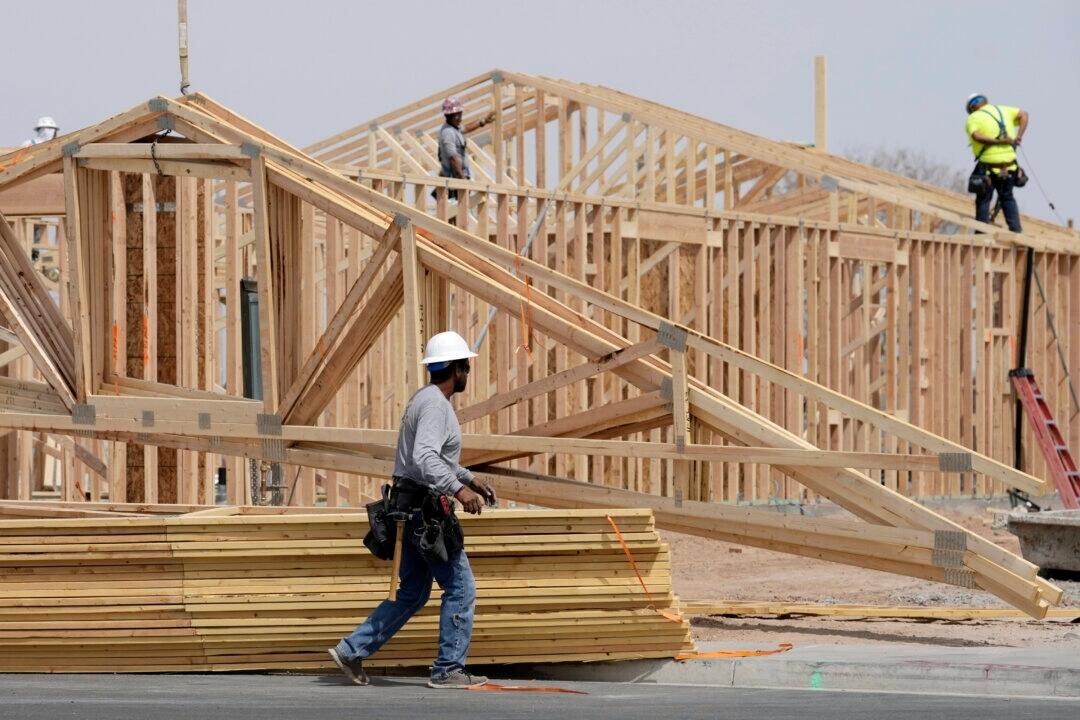
The previous summer, the City Council adopted the 2021 International Energy Conservation Code (IECC), in part because doing so made Kansas City eligible for grants under a $1 billion program authorized by 2022’s Inflation Reduction Act (IRA).

The standards went into effect on Oct. 1, 2023, meaning modifications from the original permit would now be evaluated under new IECC guidelines.

“Traditionally, a permit like this—covering a nonstructural basement finish—takes only a few days to process,” Patriot Homes President and owner Brian Tebbenkamp told a House panel on Tuesday. “Instead, it took 39 days.”

Tebbenkamp, speaking on behalf of the Home Builders Association of Greater Kansas City, was one of four witnesses to appear before the House Energy Subcommittee during a Sept. 16 hearing on eight proposed bills addressing building and appliance codes.

"During that time, the house sat with a completed foundation while our framing crew sat at home with no work,” he testified. “Our crews built that foundation from bare dirt in 39 days. Ultimately, it took a lengthy appeal to the mayor, the full City Council, and the city manager before the permit was finally approved—on the 39th day.”

The Home Builders Association of Greater Kansas City and the National Home Builders Association are among trade groups calling on Congress to adopt HR 4758, the Homeowner Energy Freedom Act, which would repeal the IRA’s “high efficiency electric home” rebates and defund its grant program for state and local governments that adopt the unamended 2021 IECC.

“This program has distorted local processes, driven up costs, and discouraged investment in housing production—all while doing little to improve real-world energy performance,” Tebbenkamp said. “I urge Congress to move quickly on this legislation to restore balance and ensure housing policies support affordability rather than undermine it.”
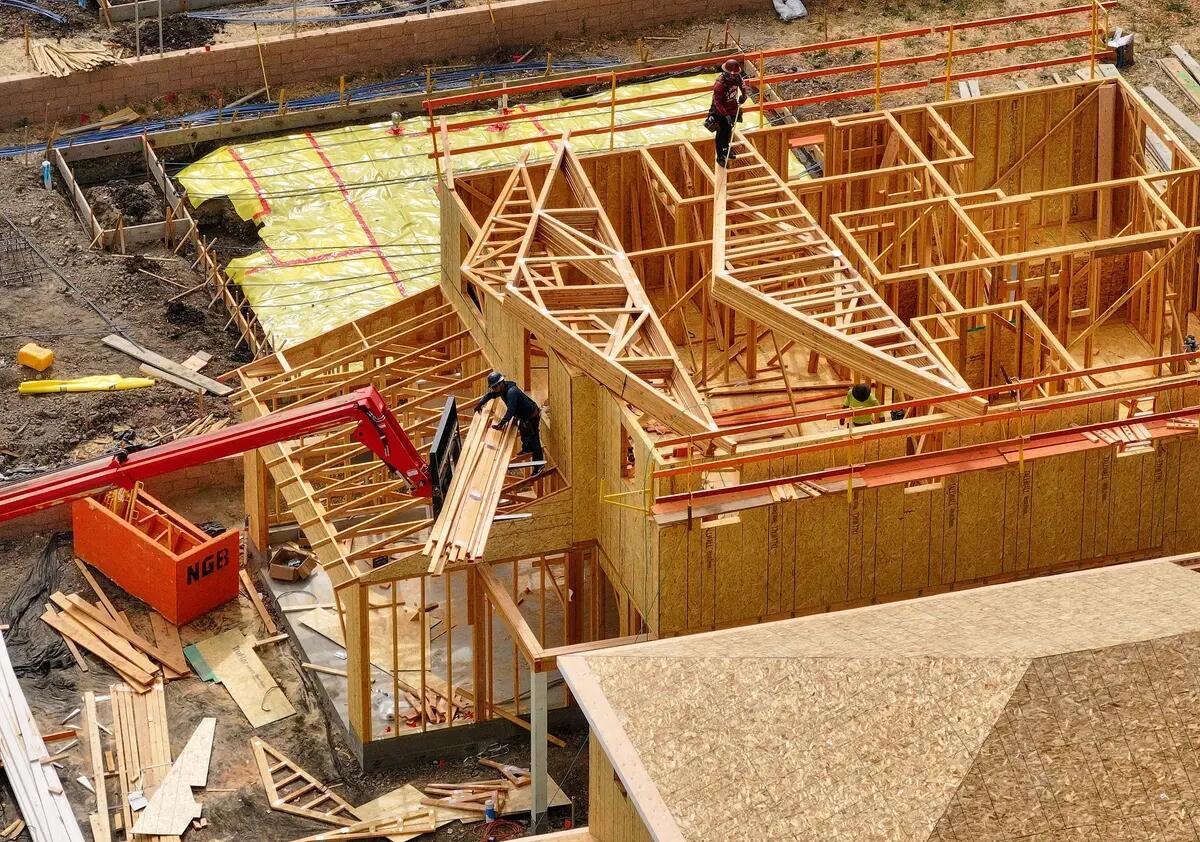
Construction workers build a home in Hercules, Calif., on July 1, 2025. Justin Sullivan/Getty Images

Code Without Covenant

The Homeowner Energy Freedom Act, sponsored by Rep. Craig Goldman (R-Texas), was among six building code measures discussed during the five-hour hearing, which included Department of Energy (DOE) Acting General Counsel Jeff Novak providing testimony for more than three hours, followed by a 90-minute panel discussion sandwiched around a 45-minute pause for a House floor vote.

The other building code-related proposals include HR 3699, to prohibit state and local governments from banning natural gas; HR 5184, to eliminate “duplicative” energy standards for manufactured homes; HR 3474 and HR 4690, to terminate the “phase-out of fossil fuels” and repeal energy performance standards in federal buildings; and HR 1355, to reauthorize DOE’s weatherization program.

American Gas Association Vice President for Governmental Affairs George Lowe, in his testimony, also espoused support for the Homeowner Energy Freedom Act, as did Association of Home Appliance Manufacturers Vice President Jennifer Cleary in her testimony.

Tebbenkamp explained how “well-intentioned federal policies” adopted inside the Washington Beltway can have “very real and negative effects” on Main Street USA.

Residential and commercial buildings must comply with federal, state, and local laws and regulations implemented through building codes, performance standards, and fuel-use efficiency requirements generally developed from consensus input by the Washington-based International Code Council and the American Society of Heating, Refrigeration, and Air-Conditioning Engineers, headquartered outside Atlanta.

The code council in 2021 updated its energy standards—the IECC—to include what many builders saw as model codes favoring electric furnaces and water heaters over those fired by natural gas or coal.

Under the Biden administration, especially after the IRA’s adoption, the federal role in what is traditionally the purview of state regulators and local planners expanded dramatically in pushing “net-zero” emissions requirements.

Tebbenkamp said “model building codes in federal legislation and regulatory programs is not new” and, while they may influence standards adopted by state and local governments, they’re rarely encoded without amendments.

The difference was IRA’s grant stipulation that eligibility required unamended adoption of the 2021 IECC, he said, calling the demand to “treat stricter codes as the universal solution ... deeply concerning.”

President Joe Biden signs the Inflation Reduction Act as Democratic lawmakers look on at the White House on Aug. 16, 2022. Drew Angerer/Getty Images

Costly Lure

In April 2022, Kansas City introduced an ordinance to adopt the 2021 IECC, Tebbenkamp told the subcommittee, noting after months of “meetings, forums, and hearings to determine whether the model code was suitable for our community,” it appeared “consensus was forming that some localized amendments would be necessary.”

Then, in August 2022, Congress passed the IRA in a partisan vote hailed by Democrats as key to the nation’s transition from fossil fuels to clean energy. Its Section 50131 created the $1 billion grant fund for state and local governments to adopt the 2021 IECC “as written,” he said.

“From that moment on, supporters resisted all amendments—worried that even minor modifications might forfeit access to the grant program,” Tebbenkamp said.

The new code was adopted in summer 2023. Before it went into effect that October, 98 Kansas City companies pulled single-family home permits, he said. “By 2024, that number had fallen to just 22—a 78 percent reduction in builders willing or able to operate under the new code.”

Since the IRA’s adoption, a Home Builders Association of Kansas City study and National Home Builders Association analysis estimate that the additional regulations can add $31,000 to the price of a new home.

Tebbenkamp said his Patriot Homes uses the Home Energy Rating System (HERS) Index “to ensure our homes perform at a high level” of energy efficiency.

The home his crews were building in April 2024 would save “$2,548 a year in utilities compared to an average home,” he said. “But to comply with the 2021 IECC prescriptive path, our clients had to spend an additional $10,300. The payoff? A ... saving [of] just $2 a year in additional operating costs.”

Let builders build, state regulators regulate, and local planners plan, Tebbenkamp said, without mandating adherence to “one-size-fits-all” codes.

“The lure of federal funding effectively shut down what had been a collaborative and constructive local process,” he said. “To our knowledge, Kansas City has not received a single dollar from the Department of Energy for adopting the code, yet the impact on local housing production has been severe.”

https://www.zerohedge.com/political/builders-say-deconstructing-green-building-codes-will-lower-new-housing-costs

Lennar Forecast Disappoints in Challenging Market for Builders


Builder Lennar Corp.’s forecast for quarterly home orders missed analysts’ estimates as affordability concerns and the wavering job market keep a lid on buyer demand.

Saturday, September 13, 2025

Optimal Spaces Market Report, September 2025

 Office:

Class A office space is in strong demand. Conversions and recent city approvals to permit conversion of office buildings to residential will remove a good portion of the vacant class B and C buildings.

Retail:
Retail is quiet and retail vacancies continue to come on the market. Continue to see retail rents fall until an alternate use is found. Reduced tourism has caused a loss of revenue not only to retail but hotels and restaurants.

Sales:
Obsolete office buildings are being sold and converted to residential or hotels, as the pricing of those office buildings dramatically lowers to residential conversions. Reduction in retail rents is causing retail property sales prices to plummet.

New York Market Overview

Office:

  1. Amazon leased 259,000 sq ft at 1440 Broadway.
  2. Verizon leased 203,000 sf at 2 Penn Plaza.
  3. Invesco signed a renewal lease at 225 Liberty Street for 200,000 sf
  4. Spectrum leases 200,000 sf at 59 Paidge Avenue for its warehouse space.
  5. Piper Sandler leased 140,000 square feet at 1301 Sixth Avenue.
  6. Latham & Watkins leases 120,000 sf at 1285 Sixth Avenue.
  7. Clear Street leases 88,000 sf at 4 World Trade Center.
  8. Paul Weiss Rifkind Wharton & Garrison signed a new sublease for 85,000 sf at 1345 Sixth Avenue, bringing its total footprint in the building up to almost 850,000 square feet.
  9. Beacon Mobility signed a lease for 83,000 sf at 2647 Stillwell Avenue.
  10. Sigma Computing signed a new lease for 64,000 sf at 1 Madison Avenue in the Flatiron.
  11. WeWork signed a lease for 60,000 sf at 250 Broadway.
  12. Steptoe signed a lease for 58,000 sf at 1133 Sixth Avenue.
  13. WeWork leased a 55,000 sf lease at 245 Fifth Avenue.
  14. L.E.K. Consulting signed a lease for 54,000 sf at 1166 Sixth Avenue.
  15. Adler & Stachenfeld rented 40,000 square feet at 1301 Sixth Avenue.
  16. Cloudflare signed a lease at 1 WTC office for 34,000 sf.


Retail:

  1. The Farmer's Dog signed a five-year lease for 58,000 square feet at 568 Broadway.
  2. Aldi leased 25,000 sf at 312 West 43rd Street.
  3. Avis Budget Group signed a lease for 21,400 RSF at 4075 Boston Road.
  4. Lidl signed a new 15-year lease for 20,700 sf at 155 East 31st Street in Kips Bay.
  5. Masaharu Morimoto leases 17,600 sf at 1255 Broadway from Montclair Hospitality Group.
  6. Gymshark signed a new lease for the entire 15,000 sf of the building at 11 Bond Street.
  7. Activate Games signed a lease for 14,800 sf at 24 Union Square East.
  8. Cocoon, a 13,900 sf, signed a new 12-year lease at 408 Columbus Avenue
  9. Mango signed a new 10-year lease for 13,000 sf at 1976 Broadway.
  10. Blinds To Go signed a 12,000 sf lease at 116 Seventh Avenue.
  11. Eternal signed a new 10-year lease for 12,000 sf at 525 West 26th Street in Chelsea.
  12. Oiji STK signed a lease for 10,500 sf at 295 Fifth Avenue.
  13. Mott Haven Discount signed a 15-year lease for 9,500 sf at 537 East 138th Street.

Letting NYC landlords cover costs is common sense, Mamdani’s plan will only worsen renting madness

 Not only is a disastrous 2019 state law pushing rent-regulated units off the market by the tens of thousands, the city’s efforts to get those “zombie” apartments on the market have stalled — and Zohran Mamdani’s rent freeze promises to make the crisis even worse.

Six years ago, then-Gov. Andrew Cuomo signed the “Housing Stability and Tenant Protection Act” into law, making it impossible for landlords ever to recoup the cost of bringing units up to code (as other laws require) when a tenant moves out after decades.

Such repairs and upgrades can easily cost $100,000 or more; pre-2019, the building owner could hike the rent to finance the work — but no more, so now thousands of apartments fall off the market every year.

The city Housing Preservation & Development department’s “Unlocking Doors” program offers to reimburse owners of “distressed” rent-stabilized units up to $50,000 for certain improvements, such as mandatory lead and asbestos abatement, electrical and plumbing upgrades and removing asthma triggers.

HPD initially offered $25,000-a-unit deals, and when that got zero takers, it doubled the grant — and got one owner to sign up.

Turns out that HPD’s “help” is so meager, with so many strings attached, that owners find themselves literally better off keeping their apartments empty.

Consider: The New York City Housing Authority estimates that it needs about $500,000 to get one of its older units up to code.

Landlords who sign up for the HPD program must also decline Section 8 applicants or tenants who want to pay the old-fashioned way, in cash; they can only accept new renters who are homeless or on the verge of eviction.

But the main issue here isn’t the failure of some ill-designed city program: The “warehousing” problem — with as many as 50,000 rent-regulated apartments sitting empty — is entirely Albany’s fault.

And this is just one part of a broader crisis, as state and city policies increasing combine to starve landlords of enough revenue to cover their “break even” costs for building maintenance plus fuel and water bills, taxes and the building’s mortgage.

In the name of “affordability,” Mamdani promises to freeze rents for rent-stabilized units — which will push many smaller landlords over the brink to bankruptcy, and force others to let whole buildings decay.

Mamdani’s supporters imagine that this mess will allow the city to assume ownership of hundreds of thousands of apartments, which it can “decommodify” and make available to the homeless and the needy: At last, “affordable” housing for all!

Oops: The city already owns 180,000 units of “decommodified” housing in NYCHA, which faces tens of billions in overdue maintenance. How will adding another few hundred thousand apartments to that fast-decaying inventory do anything but dig a deeper hole?

The only way to turn this around is to let landlords cover their costs: That means no rent freeze and undoing the 2019 law’s deadly restrictions.

Instead, the city has Mamdani poised to triple-down on the madness — and guarantee a crisis that will make housing even less affordable for ever-more New Yorkers.

https://nypost.com/2025/09/13/opinion/letting-nyc-landlords-cover-costs-is-common-sense-and-mamdanis-plan-will-only-worsen-renting-madness/

Friday, September 12, 2025

Rent in NYC’s wealthiest neighborhoods has spiked 60% — six-figure earners are struggling

 Rents in some of New York City’s wealthiest enclaves have spiked more than 60% since the pandemic, forcing even six-figure earners to struggle for apartments.

Tribeca and SoHo posted the sharpest increases, each soaring around 60% from 2020 to 2025, according to a Bloomberg News analysis of StreetEasy and US Census Bureau data.

Tribeca’s median asking rent now approaches $8,000 a month.

Long Island City added nearly 7,200 new apartments since 2020, with new-build rents averaging $625 more than typical units.AlexMastro – stock.adobe.com

Greenpoint and Williamsburg crossed $5,000, while Long Island City jumped above $4,500.

Chelsea and Dumbo saw hikes of 50% or more.

Citywide, rents climbed 27% between 2020 and 2024, outpacing Los Angeles, Boston and Washington, DC, Bloomberg reported, citing Zillow’s rent index.

High-earning renters — career professionals who work in industries such as finance and the arts — are now competing in bidding wars once reserved for homebuyers.

At least 65,000 households making between $100,000 and $300,000 are paying a third or more of their income on rent, according to city Housing and Vacancy Survey estimates reviewed by Bloomberg.

That’s tens of thousands more than just four years ago.

“It’s much easier to raise rents between tenants,” Emily Eisner, chief economist at the Fiscal Policy Institute, told Bloomberg News.

SoHo posted a 60% rent surge since 2020, among the sharpest spikes in the city.Sina Ettmer – stock.adobe.com

“That’s a big part of why all the rents are going up, especially for high-income people.”

Economists tie the surge to landlords clawing back Covid-era losses, high interest rates that kept would-be buyers in rentals and a wave of luxury development.

Long Island City alone added nearly 7,200 apartments from 2020 to 2024, mostly high-rises, with new-development median rents about $625 a month higher than typical neighborhood apartments, Bloomberg reported.

“The rent crisis in New York City isn’t a housing shortage,” longtime resident Lisa Goren told Bloomberg News.

“It’s an affordability shortage.”

Wealthier renters have surged back since what analysts call the “Great Reshuffle” of Covid-19, when thousands of affluent New Yorkers left and rents briefly plunged.

By 2023, the number of city households earning more than $100,000 jumped from 1.03 million to 1.49 million, Census data show. Households earning under $25,000 fell by more than 100,000 in the same span.

Upscale developments like Tribeca’s Jenga Tower highlight how new supply has targeted the wealthy.Christopher Sadowski

Between 2019 and 2023, the number of millionaires renting in New York nearly doubled, according to RentCafe. Some recent estimates show one in 24 city residents is now worth more than $1 million.

Cole McMahon-Gioeli, 26, who works in finance, told Bloomberg he pays 29% of his income to rent a Lower East Side two-bedroom with a roommate.

With one-bedrooms in his neighborhood now asking $4,125, he said he would have to surrender more than half his pay to live alone.

“I thought by the time I was 26 surely I would be able to afford a one-bedroom in a location I love,” McMahon-Gioeli said.

“That feels so far away now.”

Shanée Benjamin, an illustrator earning six figures, recalled finding apartments for $500 when she moved to the city in 2013. She now pays $5,500 for a Crown Heights two-bedroom — a 72% jump from the year before.

LIC’s luxury towers illustrate what one longtime resident called “an affordability shortage, not a housing shortage.”Paul Martinka

“If you made $150,000, you used to be able to live comfortably,” Benjamin said.

“The people coming in are transplants. They’re pushing out native New Yorkers and working class New Yorkers.”

Prospect Heights software engineer Ben Miller told Bloomberg he remains in a rent-regulated building under the city’s 421-a program. When the exemption expires, his family faces the prospect of moving.

“We always talked about leaving New York altogether,” he said, “but I don’t think any of us really wants to do that.”

Mayor Eric Adams, running for reelection as an independent, has touted his “City of Yes” plan for delivering record new housing. But analysts note most of it targets the wealthy.

There’s very little incentive for developers to build affordable housing without substantial government subsidies, housing experts told Bloomberg News.

Dumbo rents have jumped more than 50%, leaving even six-figure earners competing in bidding wars.Stefan – stock.adobe.com

Democratic socialist Zohran Mamdani, who defeated former governor Andrew Cuomo in the Democratic primary, has ridden the affordability issue to the front of the mayoral race. He has promised to freeze rent hikes on nearly 1 million stabilized units, currently capped at increases of 4.5%.

“The biggest problem facing New York City is affordability,” Mamdani told Bloomberg. “This is the most expensive city in the United States of America. It’s also the wealthiest city in the wealthiest country in the history of the world. And one in four New Yorkers in that same city are living in poverty.”

Bloomberg reported that Mamdani’s campaign has resonated in affluent neighborhoods hammered by rent spikes.

Greenpoint, SoHo and Long Island City voted overwhelmingly for him in June. Roughly 72% of Democrats in Greenpoint backed his candidacy, Board of Elections data show.

Some in real estate warn his plan would worsen shortages by discouraging landlords from making repairs. But others say high-income renters are proof the affordability crunch is spreading up the economic ladder.

“What has changed is who is feeling the crunch,” said Barika Williams, executive director of the Association of Neighborhood & Housing Development.

“It’s spreading all the way up.”

https://nypost.com/2025/09/12/business/rents-in-nycs-wealthiest-neighborhoods-up-60-since-covid/